Heating technology Heating system Electrical
floor
heating Electrical tile heating Electrical/Electro heating
systems
The
low-cost
heating system for heating tiles or for taking the chill off
the bathroom, kitchen, children's rooms or conservatory
(frost
protection)
with German brand name thermostat from Eberle
Floor
heating
for stone floors, tiles, parquet or e.g. even beneath dry
floors for renovation of old buildings!
Find the right
heating mats
for your own particular use - quickly and simply:
|
Application:
|
Location:
|
||||||||
|
Types
of heating mats:
|
Storage
heating: Which floor thermostat:
|
Poor thermal insulation? Good thermal
insulation?
Which is the right thermostat? Flush or surface mounted -
with timer
switch?
Colour coding
helps
identify content:
Problem: red
Explanations, positive
effects:
green
Results orange
Violet highlighting
General importance: black
Is the floor heating to be used for
heating or only for taking the chill off the floor?
Anti-chill:
If the floor heating is to be used primarily for heating, do
not try to
save money by reducing the area of floor to be fitted.
As an anti-chill measure, though, you really only need to heat
the
area where you actually stand or sit.
In this case you can be very economical with the space to be
fitted,
e.g. only beneath the dining table.
Heating:
For heating, even a very small area can provide sufficient
power to
heat the room, e.g. a red-hot hot-plate.
But of course nobody would want to walk on it!
But the greater the heating area, the more the temperature
level can be
reduced.
Explanation:
If a living space measuring 40m² is to be heated and 1200
Watts
of heating power are required, this can be achieved, as
we
already mentioned using a red-hot
hot
plate, or by means of 10m² of floor
heating.
The ?temperature of this area heating would then need
to be
12 C° above the room temperature.
(
Explanation: if
1m² of
floor is 1°C warmer than the room it is in, 10 Watts/°C are
given off
into
the room. In our case, 10 m² x 10 Watts per degree Celsius x
12 °C
warmer than the room itself means 1200 Watts of total heating
power)
12°C above the room temperature of 22 °C yields a floor surface
temperature of
34°C. This
would
be unpleasantly warm, but would be sufficient to heat the
room.
Measure:
By increasing the heated area to 20m²,
you could
reduce the amount by which the temperature of the floor needs
to be
higher than that of the room to 6°C.
The floor would then only
have
a temperature of 28°C.
Further
measure:
By increasing the heated surface to 30m², you could
even reduce
the amount by which the temperature of the floor needs to be
higher
than that of the room to 4°C.
The floor would then only
have
a temperature of 26°C.
By increasing the heated surface
to
40m², i.e. the entire room has floor heating fitted, you
could
reduce the amount by which the temperature of the floor needs
to be
higher than that of the room to 3°C.
The floor would then only
have a
temperature of 25°C.
Positive
effect:
This is where the "self-regulation
effect" of the floor
heating
comes into play. We are not
talking here about the regulation of the
electronic floor thermostat, but about the
self-regulation of
the
floor itself.
Explanation:
If the room is heated
e.g. to 24-25°C
due to sunshine, then the room has a temperature of 25°C
and so
does the floor, meaning that the 40 m² floor heating then
stops
releasing heat into the room.
It
limits
itself due to the large area and the lower temperature.
The smaller heated areas of
30
m², or
20 m² or even 10 m² would, as a result of the higher
temperate
unnecessarily continue to emit heat and therefore carry
on heating
the room.
Even if there was a temperature of
25°C in
the room, the red-hot hot plate would continue to heat the
room at the
full heating output of 1200 Watt.
Laminate floor
heating
The advantage with
the foil
lined under-laminate
floor
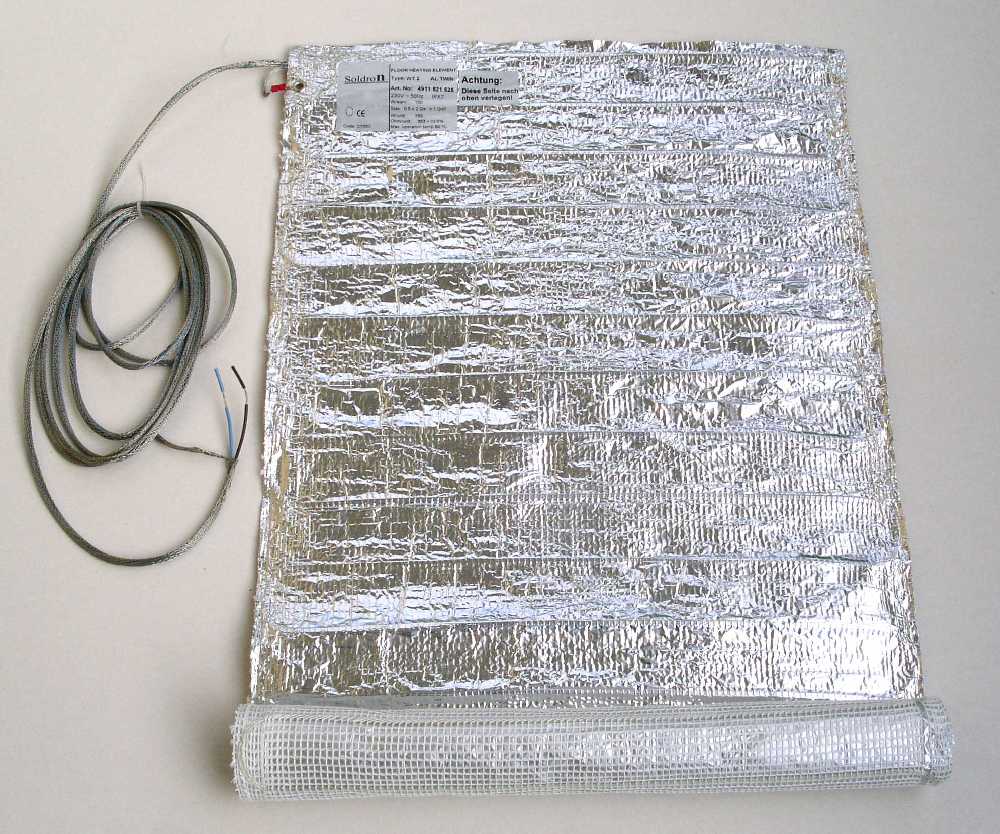
heating mat AL-Twin is that it
is not stuck to the
screed floor with
flexible tile adhesive.
-----------------------------------------------
There is no need for this procedure!
-----------------------------------------------
The
heat is channelled away from the cable by the lining through
the
laminate floor to the surface - after all the idea is to heat
the
entire area!
The decking structure with the AL-Twin laminate floor
heating is as follows: the impact sound insulation is laid on
the
subfloor, then the AL-Twin laminate floor heating, and
directly on top
of this the panels of the click laminate flooring.
The laminate floor heating mat is
laid directly
on the impact sound insulation with no flexible adhesive!
The impact sound insulation comes on 2-3mm foam rolls with
silver or
gold lining.
The 1mm heating cable of the AL-Twin heating mat embeds
comfortably
into the soft foam insulation material.
In the case of "hard" types of impact
sound
insulation in which the AL-Twin heating cable cannot embed itself, the entire weight applied to the floor is transmitted
to the
heating cable!
In laminate underfloor heating the floor sensor is not applied
to the
subfloor as with the cable
heating
mat, rather it is laid directly on the impact sound insulation
to
measure the temperature directly beneath the laminate
flooring. On the
subfloor it would be thermally insulated by the impact sound
insulation.
Both the floor sensor and also the power line can expand by a
number of
mm, meaning that a hollow must be made beneath the impact
sound
insulation in the subfloor - a space where the floor sensor
can press
through the impact sound insulation
preventing the load from the floor from impacting on the
floor.
The recommended
thermostat here is
the SDRON 100 as this has a sensor head with a diameter of
3mm.
Ideally,
this 3mm sensor head can embed itself into the impact sound
insulation
(2-3mm soft foam roll) beneath the heating mat without the
need for a
hollow tube!
With larger floor heating areas
the heating mats end up even
beneath
furniture and cupboards which would normally
not be
necessary.
On the other hand this furniture also "claims" its percentage of
the room's heat. It
is therefore impossible
to avoid heating up all the cupboards and furniture in the
room.
Either the cupboards gain their
heat via
their doors from the air in the room, thereby
cooling down
the room particularly when the cupboards are against outside
walls.
Or they gain their
heat
directly from below through the floor and no
longer extract
any from
the room itself.
There is no need to fear any excessive build-up of heat as the
length
of time required for floor heating means that the heat has
time to
penetrate through the furniture.
What power mats does the heated area need?
If the heating
areas have been defined
generously
in a room, it is easy to exceed the maximum switching capacity of the
floor heating
thermostat, especially if the higher power
heating mats of 160 Watt/m² or
even 200 Watt/m²are
used.
To solve this problem it is
possible to
use a lower power
version of
the heating mat, e.g. 120 Watt/m².
120 Watt/m² is certainly sufficient
for
heating or for taking the chill off the floor, and this allows
you to increase the
maximum area for fitting
the heating mats without having to use a "power
relay".
The 120
Watt/m²
heating mats can, if required, heat the floor up to 12°C
higher than
the temperature of the room; they then release their maximum
heating
output of 120 Watt/m² into the room.
In the warm-up
phase the lower-power heating
mat of only 120 Watt/m² naturally heats up the
floor a little slower.
This is also an advantage
because, in the long-term, this reduces
the switching frequency of the floor thermostat, which in turn
increases its active
life.
But if this power
limitation measure is not sufficient and the
size of the
heated area requires more switching power than the thermostat
can
deliver, then a power
relay
can (or must) be used.
This means that the switching impulse
(heating current)
of the floor thermostat is
not switched to the heating mats in the floor, but back to the sub-distribution
in
which the power protection or power relay uses the switching
impulse of
the floor thermostat to switch
directly from the sub-distribution to the heating mats.
If this measure is necessary a higher power heating mat can
then be used, e.g. 160
Watt/M²
instead of 120 Watt/m².
If the switching impulse of the
floor
thermostat cannot be fed back
into the
sub-distributor because
e.g.
no more leads can be laid or because no chases for
installation
cables can be laid, there is the thumb-size relay with 16A switched
current which,
if needed, can fit in the 100mm by 100mm connection box
where
the heating mats are connected in parallel.
How quickly
do the heating mats warm a tiled floor?
The following
table
shows how long it takes to warm up the rooms with different
thicknesses
of flooring and different heating power ratings:
1°C increase in
temperature in
minutes:
|
Floor thickness: |
Dry floor 2 cm |
Thin flooring 3 cm |
Normal thickness 4 cm |
Normal thickness 5 cm |
Thick flooring 6 cm |
Storage flooring 8 cm |
Storage flooring 10 cm |
Flooring on base concrete 15 cm |
|
Heating power: |
||||||||
|
120 Watt/m² |
5.5 min |
8.3 min |
11.1 min |
13.8 min |
16.6 min |
22.2 min |
27.7 min |
41.6 min |
|
160 Watt/m² |
4.1 min |
6.2 min |
8.3 min |
10.4 min |
12.5 min |
16.6 min |
20.8 min |
31.2 min |
|
200 Watt/m² |
3.3 min |
5 min |
6.6 min |
8.3 min |
10 min |
13.3 min |
16.6 min |
25 min |
|
250 Watt/m² |
2.6 min |
4 min |
5.3 min |
6.6 min |
8 min |
10.8 min |
13.3 min |
20.0 min |
|
300 Watt/m² |
2.2 min |
3.3 min |
4.4 min |
5.5 min |
6.6 min |
8.8 min |
11.1 min |
16.6 min |
The
figures given in the table only refer to the heating of the
flooring
surface itself. The fact that heat is lost into the room
during the
heating period itself is not taken into consideration.
If this is to be factored in, roughly 20 - 30%
must be
added to the time.
Colour
limitations:
Not permitted, possible with
restrictions, possible,
no restrictions.
Selection of heating
mat types:
There are two types of heating mat. (both are
screened
- jacketed with protective mesh!!)
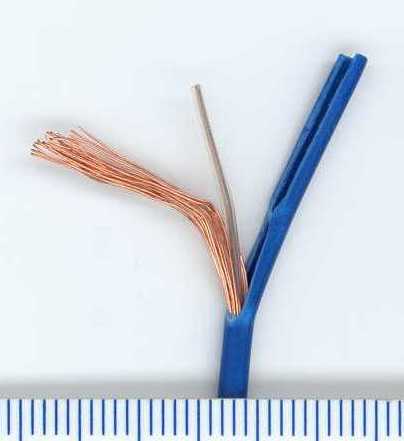
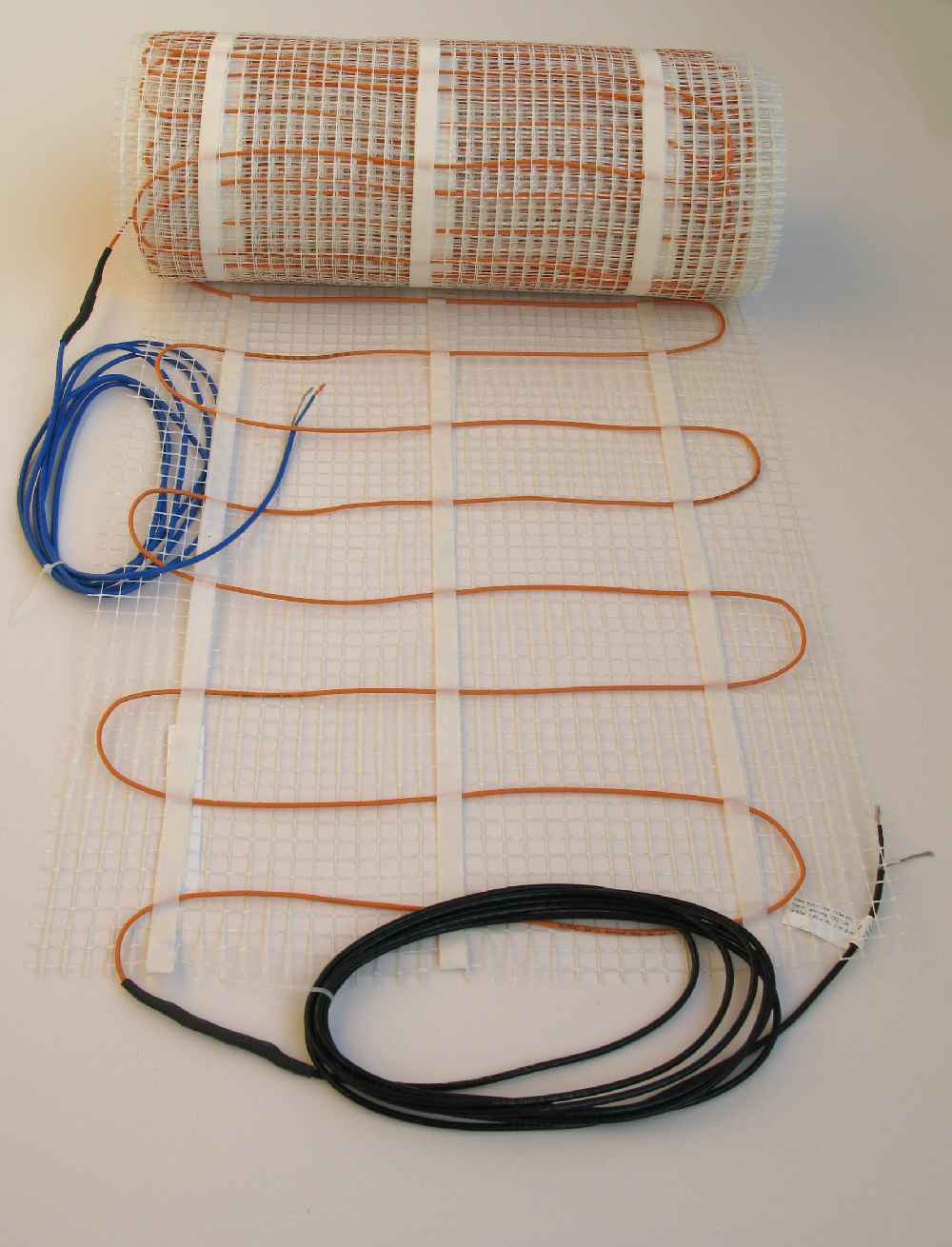
Single type - one heating wire in the heating cable, 2x
one
connection lead at each end.
FH 160W/m² & 100W/m²,
WTS 150W/m² & 200W/m²,
TFS 160W/m² & 200W/m²,
WTN 120W/m²,
Cotton mesh or reinforced glass-fibre
fabric
There are two basic types of
heating
mat; those in which the heating wire is woven onto a
coarse-mesh cotton fabric and those in
which the heating
wire is
applied
to a reinforced glass-fibre fabric.
The
advantage of the cotton
type, e.g ( TFS
160-200 Watt/m² ,
WTN 120-160 Watt/m², WTL 160 Watt/m² ) is
that
it is flexible.
This means that the heating mat can be compressed lengthways
to create
an intermediate length.
For example, a heating mat of 7
metres
in total
length is required, but no 7m long heating mats are produced.
They are
either
3m², offering 6 metres in length, or 4m² giving 8 metres, but
not 7
metres.
The cotton mesh heating mats can
only be compressed evenly, by up to as much as
20% if
required.
In this way an 8 metre-long mat can be compressed to form a 7m
heating
mat. The heating wires are then no longer 6cm apart; this
distance is
now reduced to 5.5cm. The heating mats can also be slightly skewed diagonally e.g.
to
circumvent a wall projection.
special
site
more heating mats here
| picture TN-S
|
 |
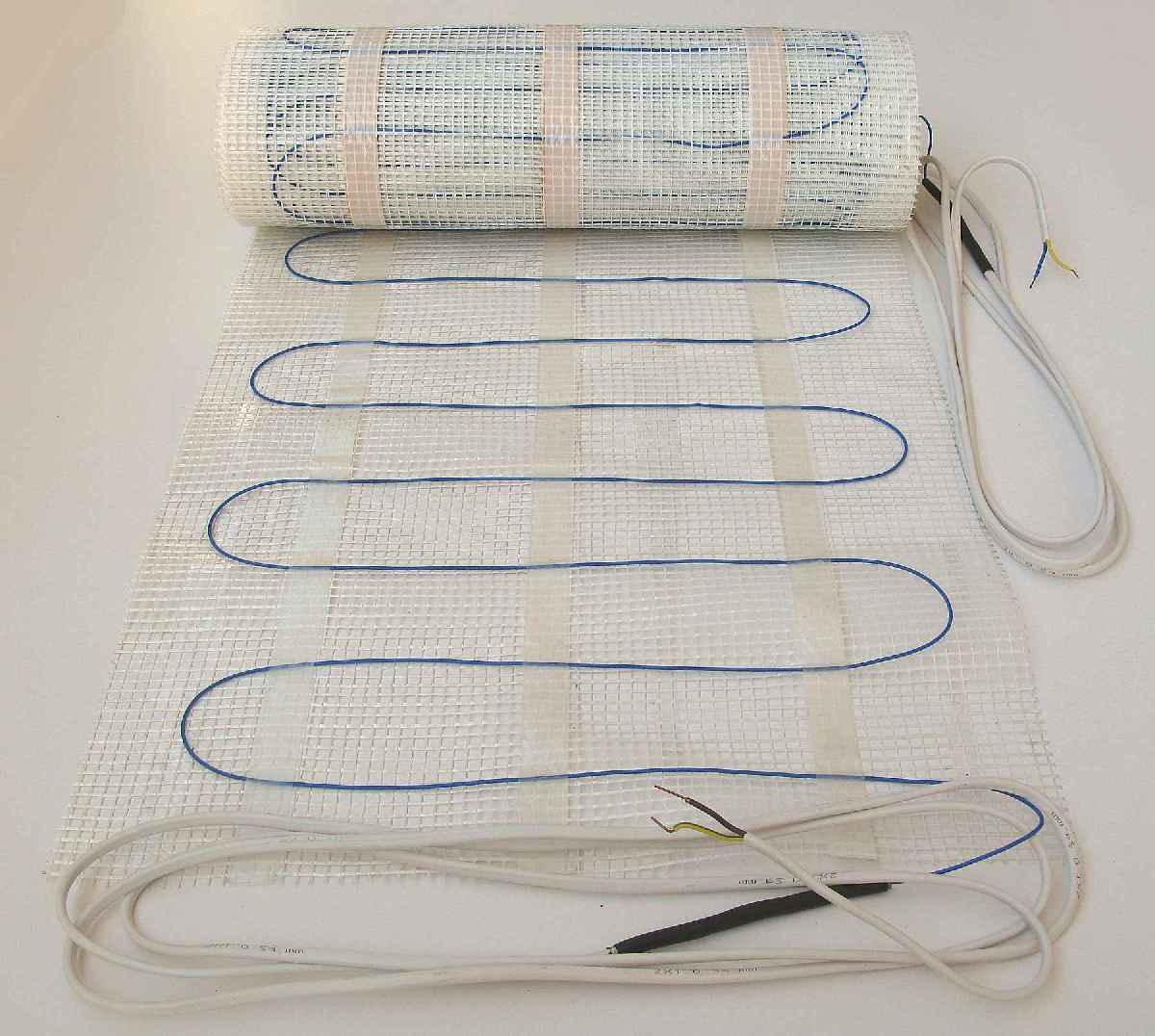
Twin type - One feed heating wire and a second return
wire
in the heating cable, 1x two connection leads at each end.
FH-Twin 160W/m²,
Raychem FH-Twin 160W/m²
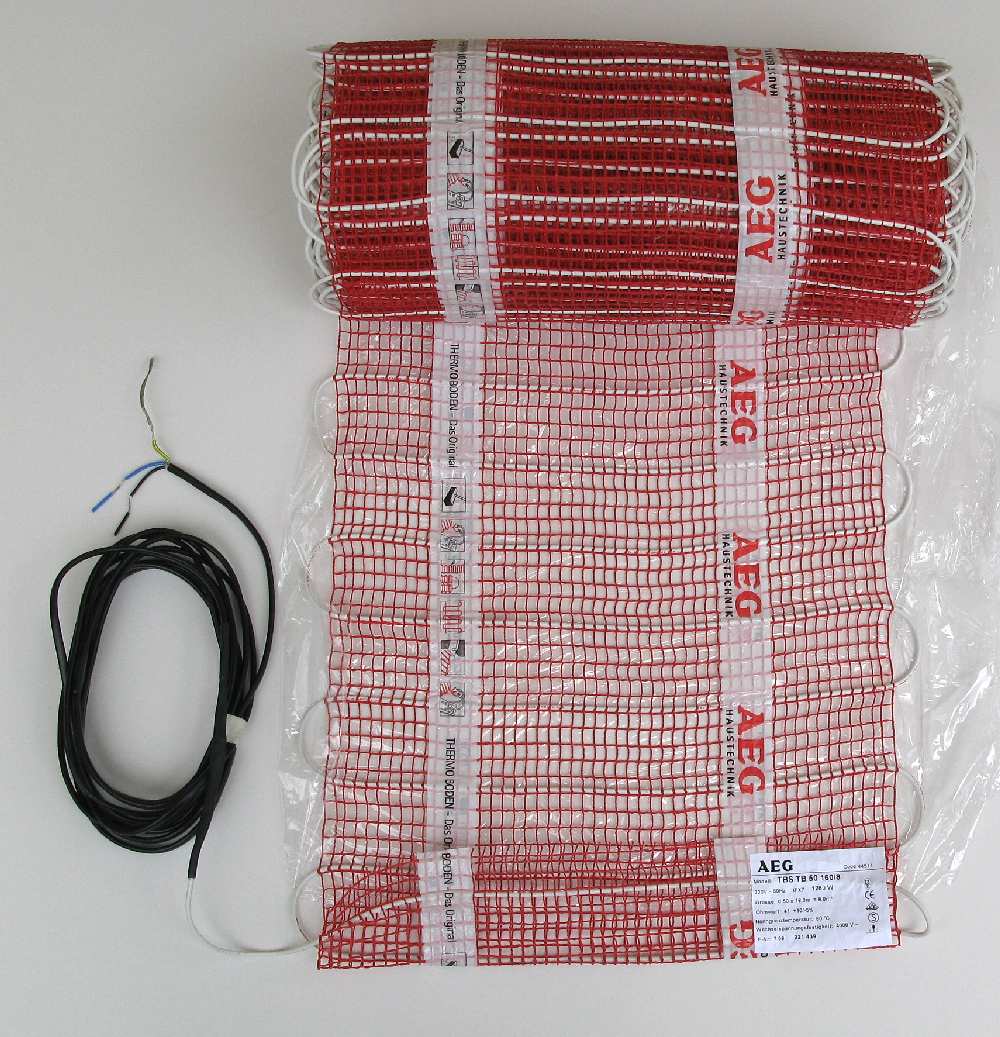
AEG TBS TB 160W/m²
WT-Twin 150W/m² & 200W/m²,
TFR 300W/m² outdoor
picture
FH-Twin
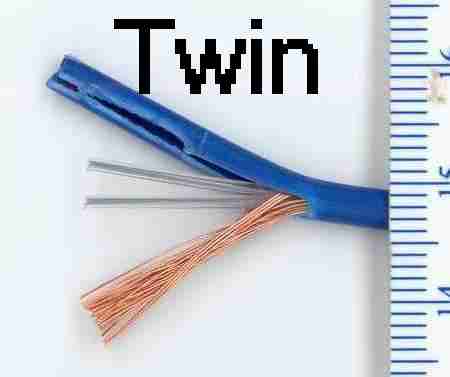
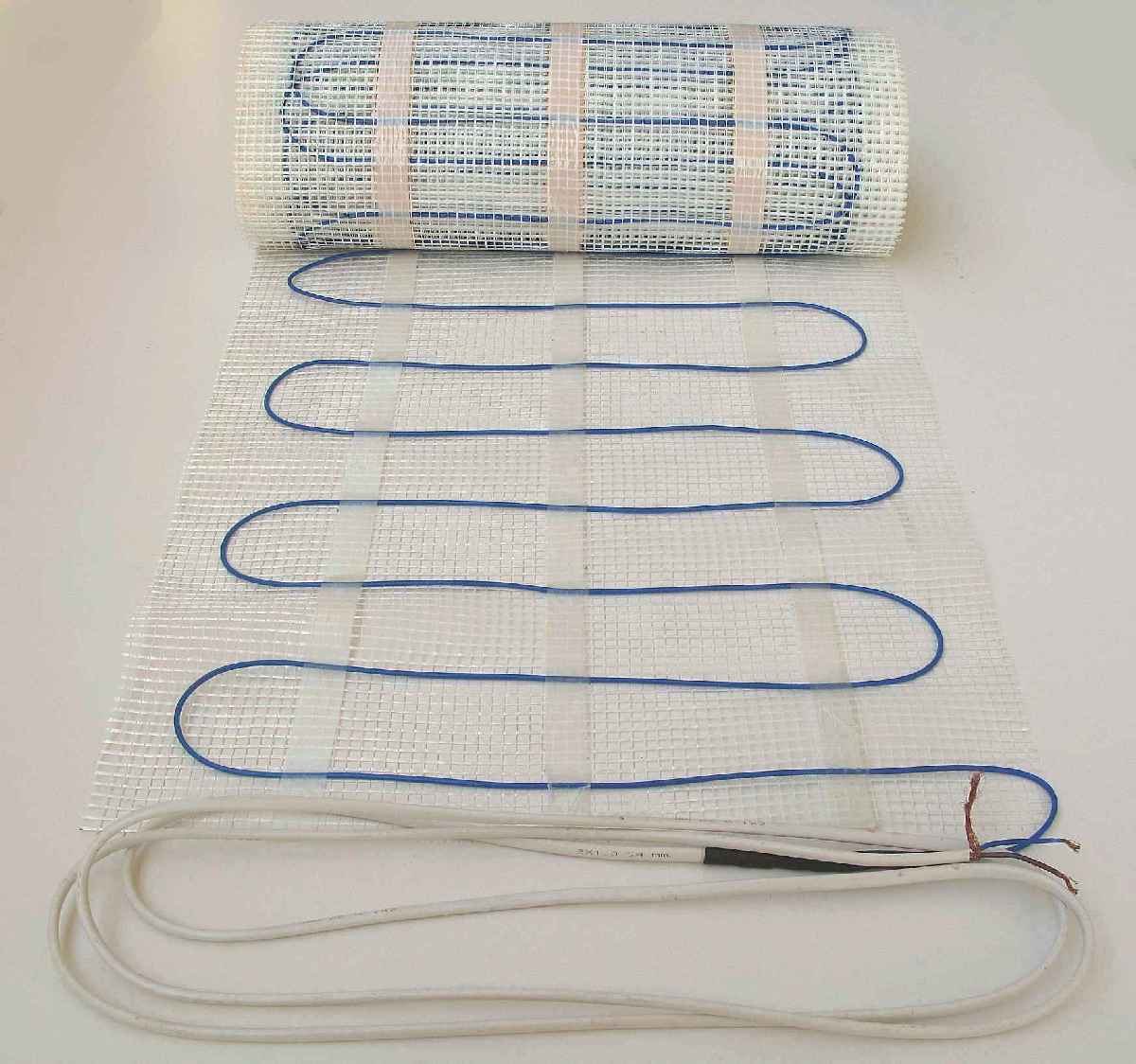
best quality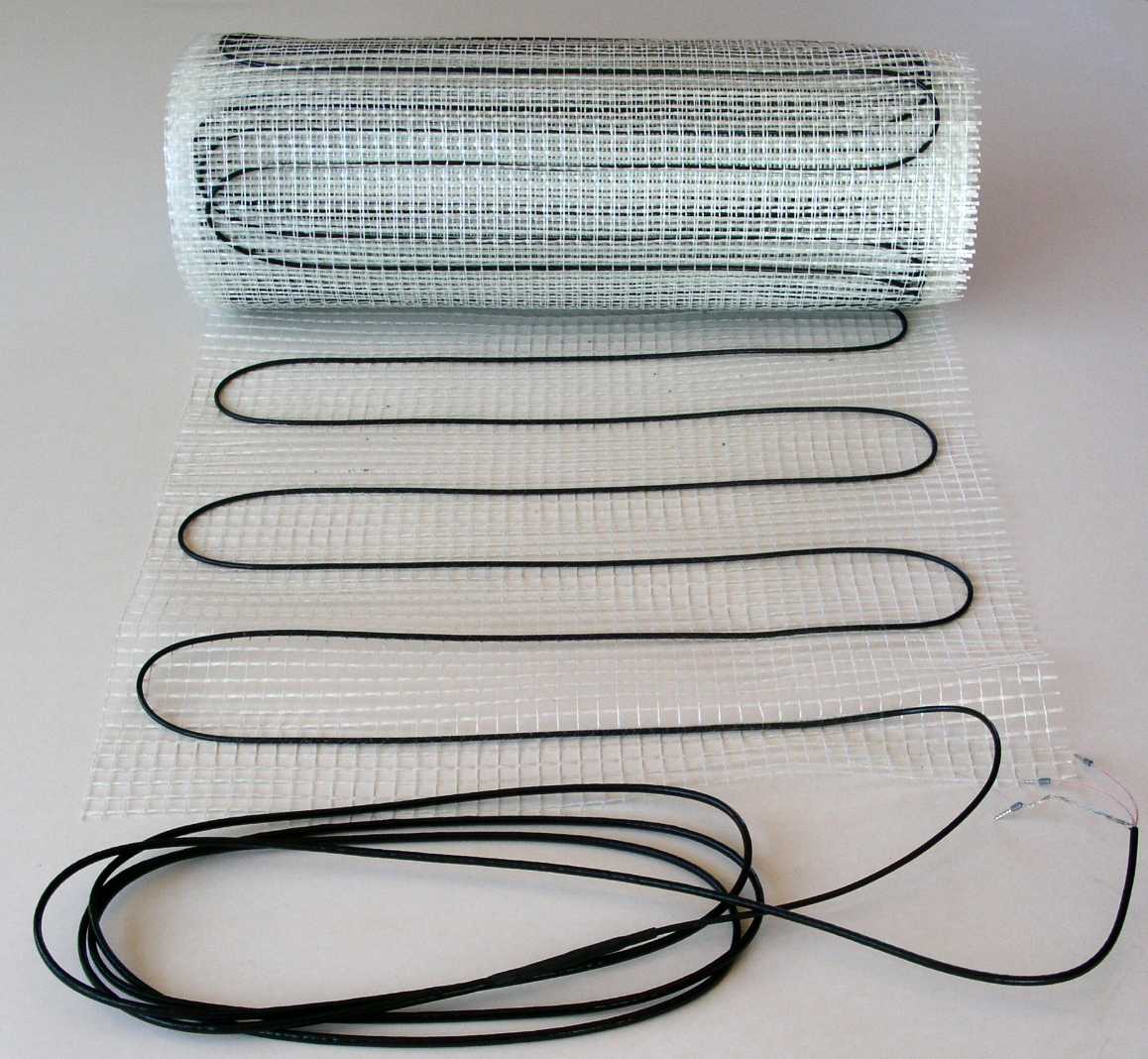 FH-Twin underfloor heating (with a Dual Core Cable ) 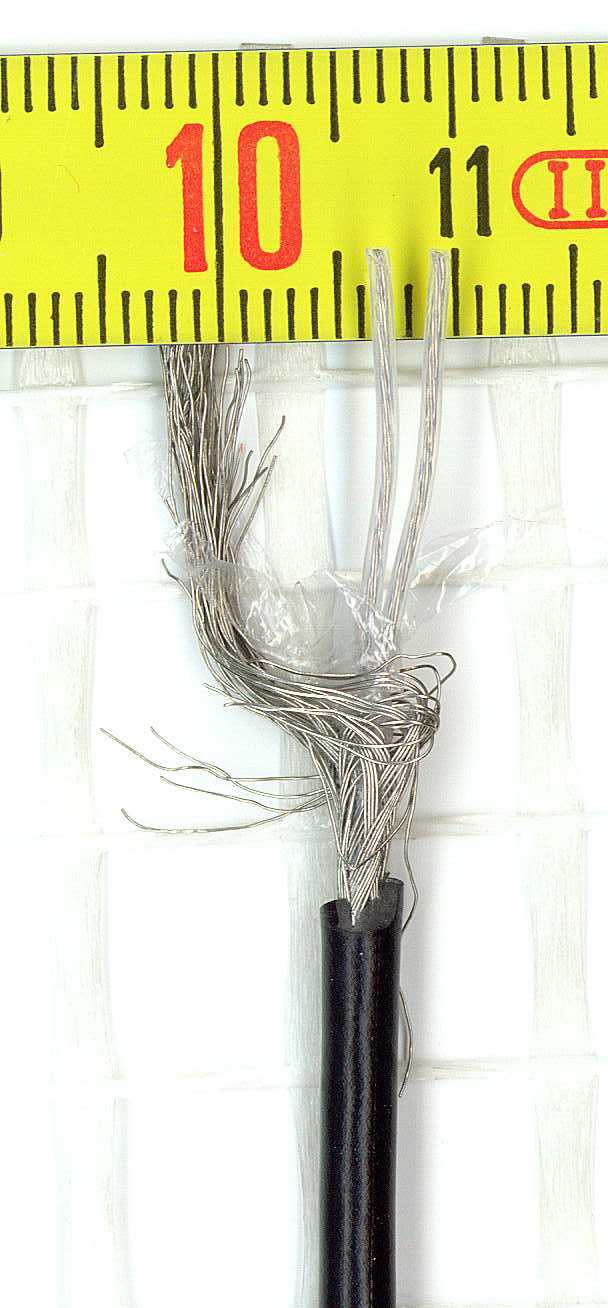 |
 |
picture R-FH-Twin
|
picture AEG Thermo Boden TBS TB
|
picture WT-R-Twin
300W/m²
40-45mm cable distance Attention :only
on concrete!!
|
picture WT-FTwin outdoor anti-snow a anti-ice Use in Sidewalks Garage entrances Ramps, etc. in order to keep them free of snow and ice . Use with the DTR-E 3102 it is heated solely by the freezing point otherwise -- this saves electricity.
|
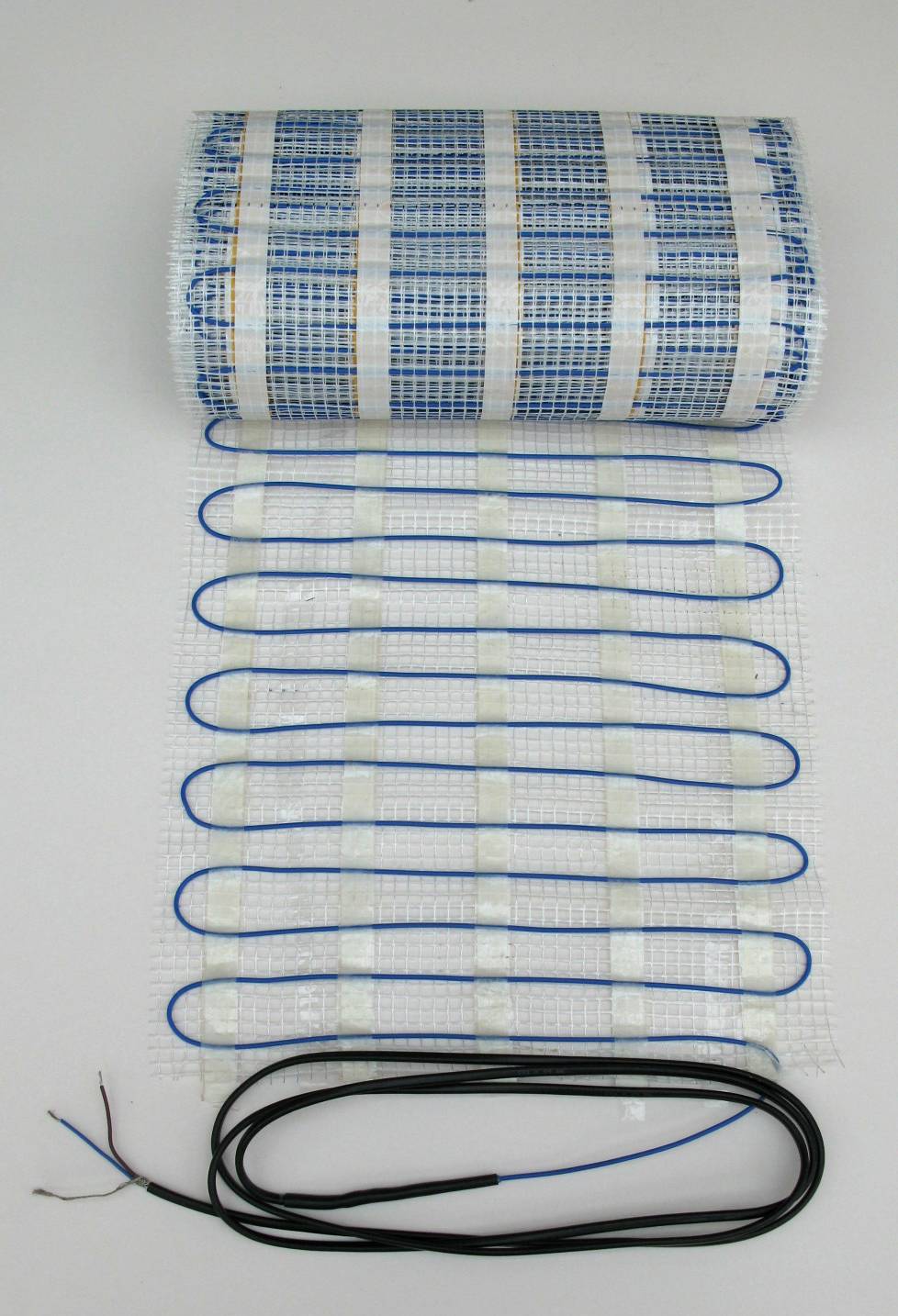
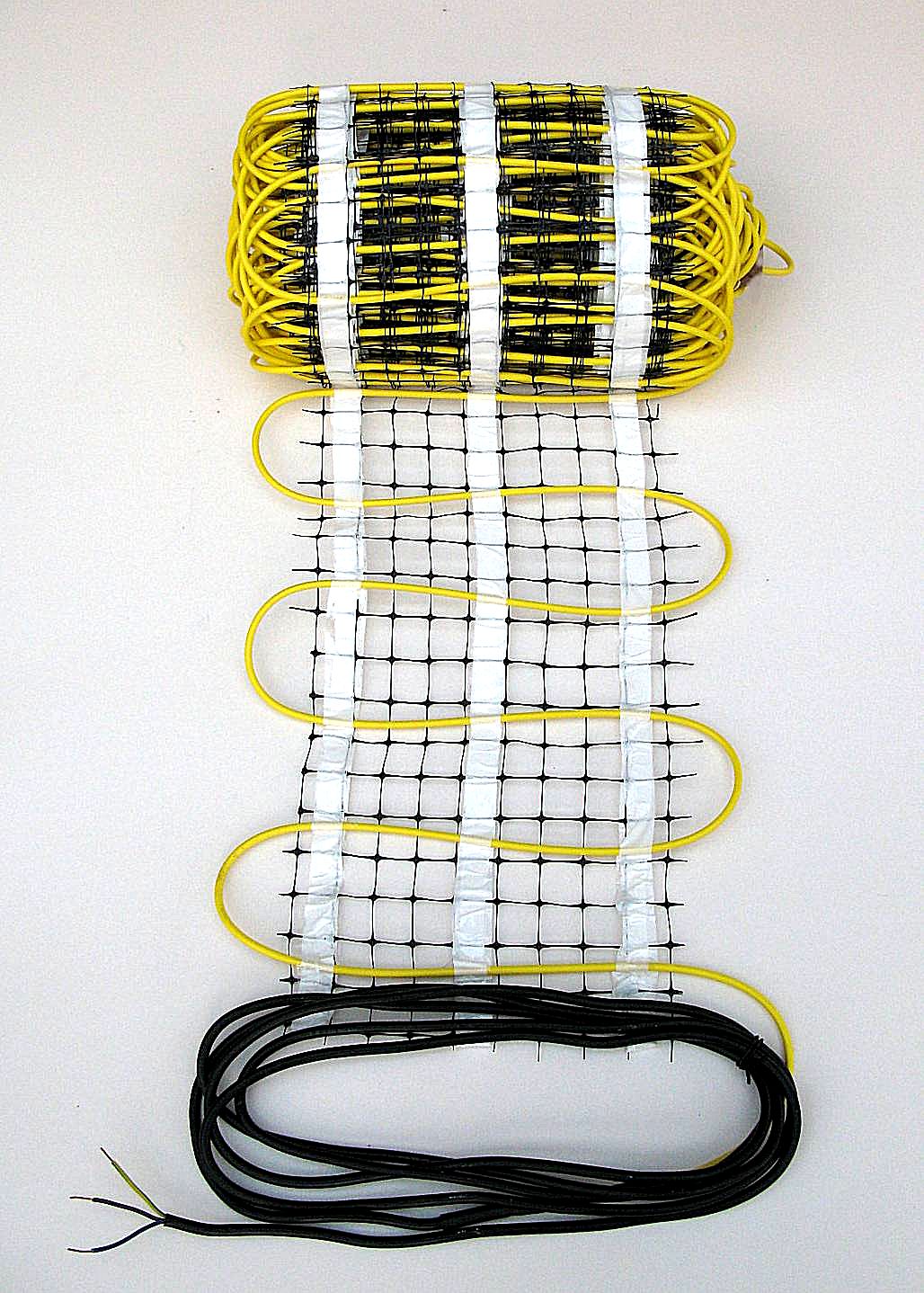
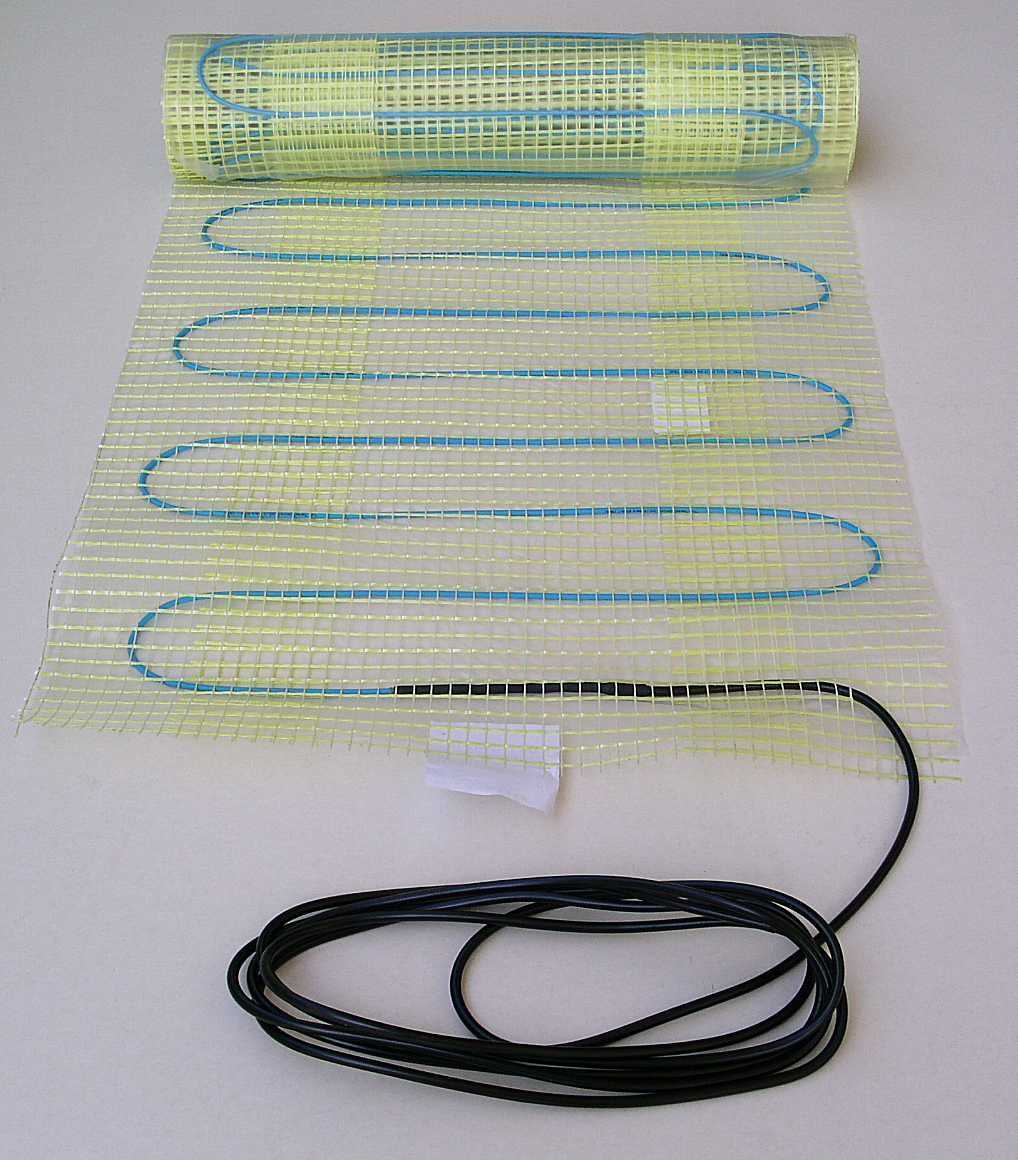
The "single heating mats" have one heating wire in the heating cable which winds through from the beginning to the end of the heating mat.
There is a 3-4m PTC resistor connection cable at each end of the heating mat, i.e. both ends need to be connected.
Take the example of a rectangular room with the door on
one of
the longer walls, and the thermostat is to be mounted next to
the light
switch.
In this case, if the heating mats are laid in strips
perpendicular to
this wall
resulting in an even number of strips,
the
other end with its connection
lead is on
the same wall as where you
began.
It is then no trouble to feed the connection leads from both
ends of
the single-type to the thermostat.
If the 4m PTC resistor connection cable
is not long enough, it would be
possible,
although laborious, to lengthen
this PTC
resistor connection cable (it can also
be
shortened).
You are provided with sufficient lengths of cabling. The
"heating
cable" can simply be detached from the heating mat and used as
an
extension.
You sacrifice 6-15cm of the
heating mat
and gain an additional 1-2m for
extension
purposes.
This is of course heating cable and must then also be stuck to
the
screed floor or subfloor (flexible tile adhesive).
Twin with a dual core heating cable-----/ /-----Single with only one heating cable
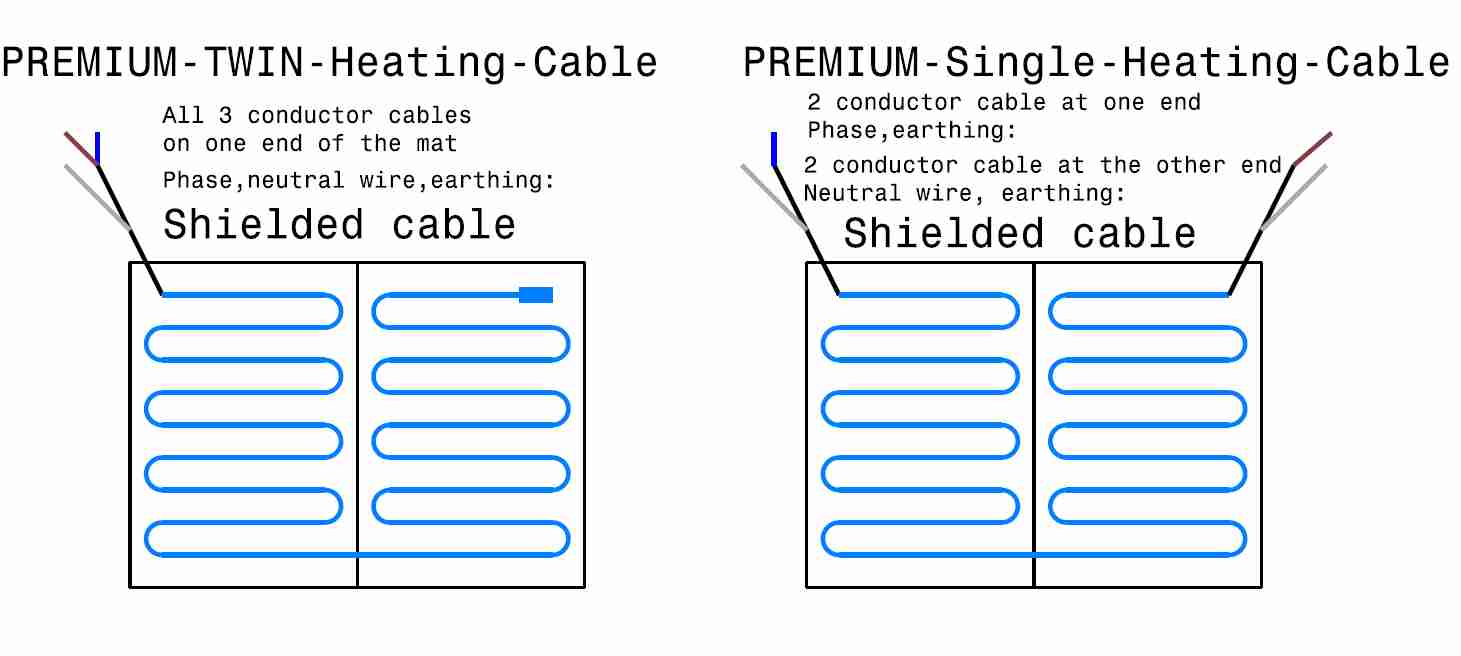
In the case of the "Twin-Type"
the heating wire winds through the heating cable from the
start to the
end of the heating mat, reversing at the end of the heating
mat and
returning to the start, meaning that only one end of the
heating mat
needs to be connected.
Twice the length of heating wire is
incorporated in a twin-type as in a single-type
(from
beginning to end and back again).
This is why a twin-type is more expensive than a single-type.
In the WT-S and WT-Twin
the
heating cable is fastened with double-sided adhesive tape to
the fibre
glass mesh. If you wish to use the self-adhesive
underside
as a laying aid, the protective strips need to be
removed from the double-sided adhesive
tape.
However it is also possible to simply roll the WT
or WT-Twin into position without
making
use of the self-adhesive effect.
In the WT-S and WT-Twin
the
heating cable is fastened with double-sided adhesive tape to
the fibre
glass mesh. If you wish to use the self-adhesive
underside
as a laying aid, the protective strips need to be
removed from the double-sided adhesive
tape.
The WTR-Twin
is available with 300Watt
/m²
at very low heating cable distance of only 45mm (high
comfort)!
Use only at thick concrete floor!
The Raychem-FH-Twin
is
also self-adhesive and can be
used as a
laying aid when trowelling etc.
In the case of the FH or FH-Twin
the heating cable is stitched onto the fibre glass mesh along
the
entire length.
The fibre glass carrier mesh is completely self-adhesive on
one side to
help laying when trowelling etc.
The FH and FH-Twin with stitched on heating cable.
In the case of the TFS WTN WT3L
and
AEG TBS TB the heating cables are stitched into
the fabric
carrier mesh, the length of which can
be
gathered in.
The AEG TBS TB also has
self-adhesive fabric carrier mesh as a laying aid when laying
in
flexible adhesive.
The phenomenon of electromagnetism
must also be taken into account.
It is not known precisely how sensitive humans are to
electrical or
magnetic fields.
It is possible, however, that this aspect has been
underestimated.
All heating mats are screened,
i.e. they
are surrounded by a protective wire
mesh
similar to that used in a TV coaxial cable.
This screens in particular the electric
field.
In the case of "Twin heating mats"
in which the heating current is fed into the system in one
wire in the
heating cable and is returned in a second wire, the magnetic
fields
also cancel each other out, meaning that the twin
heating mat is electromagnetically neutral.
Construction thickness of the
heating mat
Cotton mesh or reinforced glass-fibre fabric
There are two basic types of heating mat; those in which the heating wire is woven onto a coarse-mesh cotton fabric and those in which the heating wire is applied to a reinforced glass-fibre fabric.
The advantage of the cotton type, e.g ( TFS 160-200 Watt/m² , WTN 120-160 Watt/m², WTL 160 Watt/m² ) is that it is flexible. This means that the heating mat can be compressed lengthways to create an intermediate length.
For example, a heating mat of 7 metres in total length is
required,
but no 7m long heating mats are produced. They are either 3m²,
offering
6 metres in length, or 4m² giving 8 metres, but not 7 metres.
The cotton mesh heating mats can only
be
compressed evenly, by up to as much as 20% if
required.
In
this way an 8 metre-long mat can be compressed to form a 7m
heating
mat. The heating wires are then no longer 6cm apart; this
distance is
now reduced to 5.5cm. The heating mats can also be slightly skewed diagonally e.g. to
circumvent a
wall projection.
The other type of heating mats, types
FH
160 Watt/m² and FH-T 160 Watt/m and types
WT-S 150 Watt/m² and WT-T 150 Watt/m²are
applied to reinforced glass-fibre mesh. This has
the
advantage that these heating mats are
very
flat meaning that they
lie very
low on the floor. The FH1 & WT-S version is only 2mm high, whereas
type
FH-T, WT-Twin is only
2.5mm high.
The FH version is only 2,7mm high, whereas type FH-T is
only 2.9mm high.
This is an advantage if,
when
renovating older buildings, the doors are already installed and
the the amount of available height is
restricted.
However, as a result of the "inflexible" glass fibre mesh it is not possible to skew types FH, ST-W, FH-Twin and WT-Twin diagonally or to compress it.
The cotton mesh versions come in the following thicknesses (
TFS 160-200
Watt/m² 3.5mm, WTN 120-160 Watt/m² 2.8mm, WTL
160 Watt/m²
3mm)
A further
difference in
the heating mat types is the type of current feed:
There are heating mats with cold lead connection
cables (4m) at
each end of the heating mat(
TFS 160-200 Watt/m², WTN 120-160 Watt/m², FH
160 Watt/m²),
and others in which all the
connection cables are attached
on one side of the heating mat ( WTL 160 Watt/m² FH-Twin 160
Watt/m²) .
With heating mats in which all the
connection leads are
attached on one
side, you
do not need to worry where
the
other end
of the heating mat ends up in the room for trailing
back the
other
connection leads.
These heating mats with only one
connection lead, in which the heating
current in the heating cable runs backwards and forwards,
are also
magnetically neutral,
as the two
currents running in opposing directions cancel
the opposing magnetic field out.
The electrical field
in all heating mats is shielded by the
protective wire mesh.
To heat the conservatory (or simply
take
the chill off the floor), take advantage
of the fact that heating mats of different power levels
can be
fitted.
Because despite the good thermal insulation properties of
modern
windows and facade elements with k-values of 1.1 or above, the air cools on contact with the colder
glass
surfaces, and then falls
to the floor
of the conservatory towards the back wall of the
house where it
rises again. The result is a
draught, and
unpleasant swirling of the
air in the room.
This stream of air from
the
windows cools the front section of the heated floor but not
the rear
section, where the heating warms the air back up.
This warm air then rises on reaching the wall of the house and
warms
the wall.
The entire swirling effect is amplified by the floor
temperature
differences in the different parts of the conservatory and the
heated
house wall.
To counteract
this effect it is possible to fit a 200 Watt/m² heating mat
near to the
windows and to fit only a 160 Watt/m² mat in the
inner and
central areas resulting in the
200 Watt/m² heating mat heating the outer area several
degrees higher than
closer to the house.
A type of "thermal
curtain" is formed which counteracts the effect of the downflow
of cooler air.
The same effect can be obtained if 120 Watt/m² mats are fitted
in the
central area and 160 Watt/m² mats around the outside. The
crucial
factor here is that the floor around the edge should be
several degrees
warmer than in the middle.
Exception: if there is a radiator or fireplace in the
conservatory
this is then the defining heating element in the conservatory
and the
countermeasure of floor areas being heated to different
temperatures no
longer functions then.
The heated air then rises above the fireplace/radiator.
Which is the right
floor
thermostat?
In terms of electronic floor
heating
thermostats we distinguish between
- embedded types Eberle Thermostat EB 535, EB F2A,EB
F2T, EB 512
;OJ OTN, OCC2D2
Raychem TC & TA SDRON
100, DRON-O-SOL
16A( built
into the wall
in an embedded junction box) and
- mounted types EB Easy 3ft, EB 531 (fitted to the
wall with
no recess).
- We
also
distinguish between thermostats
with a timer switch (daily timer EB Easy 3ft,
daily and weekly
timer EB 535, EB 512, OJ OCC2D2)Raychem TC
& TA SDRON 100, DRON-O-SOL
16A and those
- with no timer (only
for switching on and off and for setting the temperature
EB F2A, F2T,
EB 531, OJ OTN)
The floor
thermostat Eberle
EB Easy 3ft with
daily timer has a 360°
time
disc with 48 "switch riders" which can be set
using a finger
nail, ensuring that the
same
switching pattern is kept to every day. The Easy 3ft
thermostat
has a 3-way switch: 1. On, 2. Off, 3. Timer.
The two Eberle thermostats EB 512 and EB 535,
OCC2D2
Raychem TC SDRON or
DRO-O-SOL
have a daily/weekly
program
with multiple on/off switching times per day.
There are pre-programmed switching times and also individually
definable switching programs; the EB 646 Instat 8 has a "self-learning heating curve".
This means
that if on one day the EB 535 has
not
reached the
desired floor temperature of e.g. 27°C at the required time
of 6.00 and
has to heat up for 5 minutes longer
to
reach 27°C, on the following day it
would begin 5 minutes earlier to reach the required
floor
temperature punctually
at 6.00.
If the EB 535 Instat 8 reaches the required floor temperature
2 minutes
earlier on the next day, the thermostat would switch on 2
minutes later
the following day.
The EB 535 Instat 8
can
also be switched from floor temperature regulation to room temperature
regulation,
as the EB 535 Instat 8 has a second temperature sensor; the
floor
sensor would then only function as a floor limiter. The
default setting
is floor temperature regulation.
Depending on the power of the
heating
mat only
a limited area of heating mats can be controlled by one floor
thermostat. If the maximum switching
power
of the floor thermostat is exceeded, either the power of the heating mat can
be reduced
from 200 Watt/m² to 160 Watt/m² or 120 Watt/m² or an
additional
relay can be used
mounted
types!
R34 16A 3600W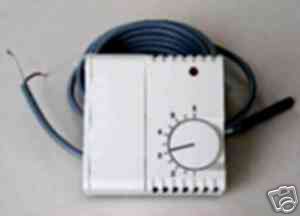 At 120 Watt/m² 30m²
possible
|
Simplicity itself: but
switches a
powerful 16 Amps simply set the temperature turn on or off EB 52531 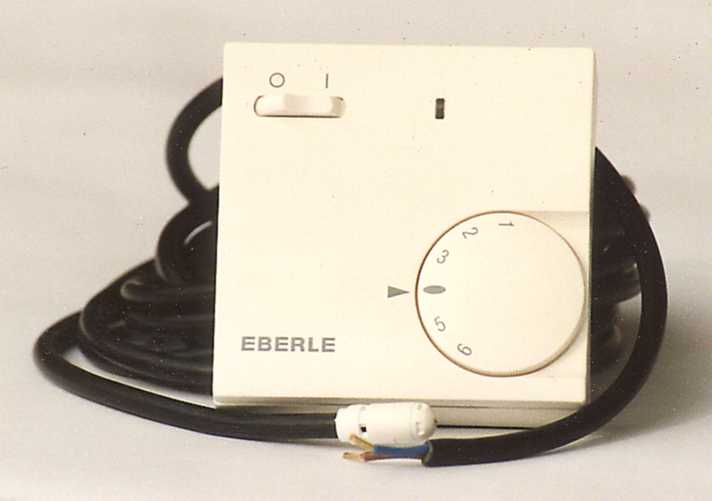 At 120 Watt/m² 30m²
possible
|
Simple operation: Daily
timer thermostat
with switch rider simply set the temperature and turn on or off, or use the timer EB EASY 3 ft 16A 3600W 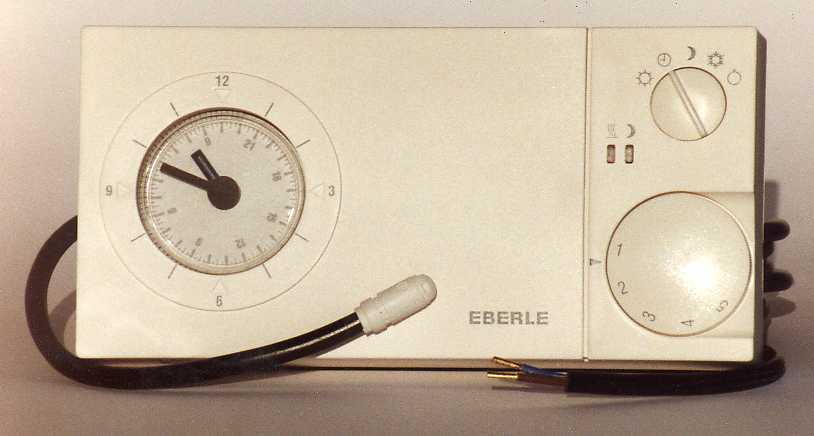 At 120 Watt/m² 30m²
possible
|
| Simplicity itself: but
switches a
powerful 16 Amps simply set the temperature turn on or off TR 85 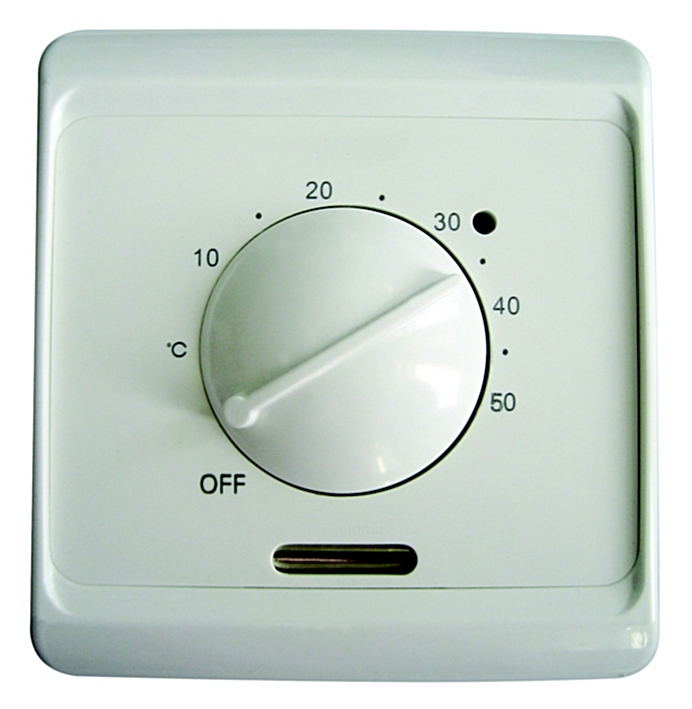 At 120 Watt/m² 30m²
possible
 User
Manual User
Manual |
||
easy embedded types!
| Easy operation: simply set the temperature and turn on or off TA RaychemT2 FloorTemp Plus° Comfort Thermostat for floor heatingRaychem T2 TA 13A 3000 W
At 13 Amps, only smaller areas are possible.
Range confinement in setting button
Tech Data:
User ManualEnglisch, Deutsch, Francais, Nederlands, Norsk, Svenska, Dansk, Soumi, Polski, Russisch: |
Simple
operation:
At 120 Watt/m² 30m²
possible
Range confinement in setting button F2A F2T Technical Data in PDF-format: Operating in PDF-format:
|
Simple operation: simply set the temperature and turn on or off EB F2T &Timer Function
EB F2T thermostat with timer for electric under floor heating and anti-chill systems. The floor temperature is measured by the NTC sensor and regulated by means of the EB F2T electronic thermostat. The sensor of the thermostat is laid in the floor beneath the heating wires in the sensor protection tube, directly beneath the heating layer. The floor temperature can be set on the thermostat to meet your personal requirements and those of the particular room (living room or bathroom) .At 120 Watt/m² 30m²
possible
Range confinement in setting button Acrobat Reader F2A F2T Technical Data in PDF-format: Operating in PDF-format: |
| Simple operation: simply set the temperature and turn on or off OJ OTN
At 16 Amps, only smaller areas are possible. OTN floor thermostat * Electronic floor thermostat *Type of protection: IP 21 (suitable for bathroom) *Setting range: +5/+40 °C * Measurement voltage: 230 V/50 Hz *switched current: 14 A * max. connected load: 3200 W * With 2-pole ON/OFF switch * Night-time reduction -5 K, possible with separate clock * Isolated output (relay: 16 A) * Dimensions: 80 x 80 x 48 mm * Assembly type: flush-fit * NTC floor sensor (diameter: 6 mm) with 3 m connecting lead * Certificate: DEMKO,CE * To match switch ranges:
OTN Technical Data in PDF-format: Operating in PDF-format: |
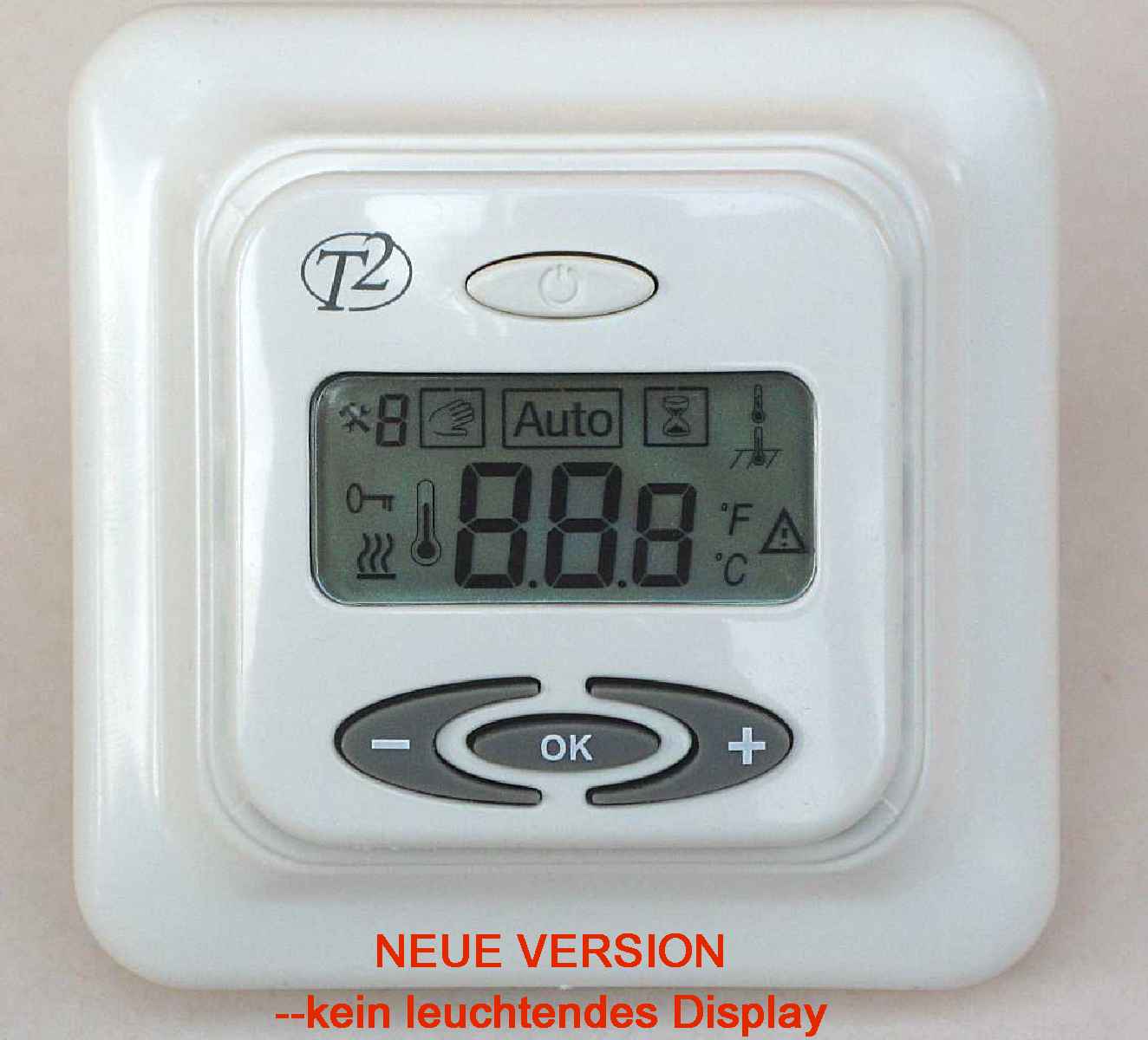
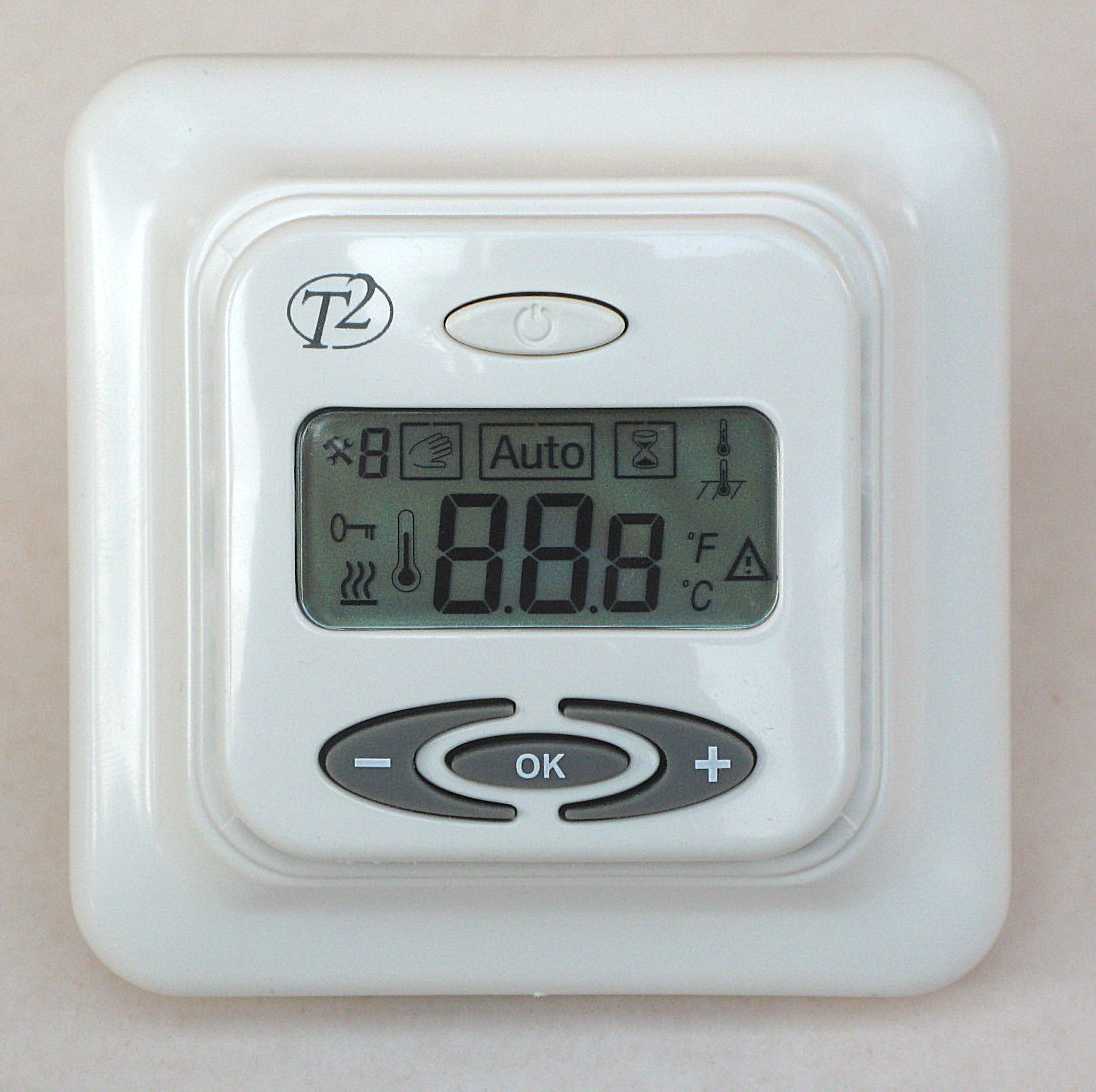
Simple operation: simply set the temperature and turn on or off T²FLOORTEMP
T²FloorTemp thermostat for electrical under floor heating and undertile heating systems or room temperature thermostat for electrical floor heating The floor temperature is measured by the NTC sensor and regulated by means of the T²FloorTemp electronic thermostat. The sensor of the thermostat is laid in the floor beneath the heating wires in the sensor protection tube, directly beneath the heating layer. The floor temperature can be set on the thermostat to meet your personal requirements and those of the particular room (living room or bathroom) .At 120 Watt/m² 30m²
possible
Range confinement in setting button
|
|
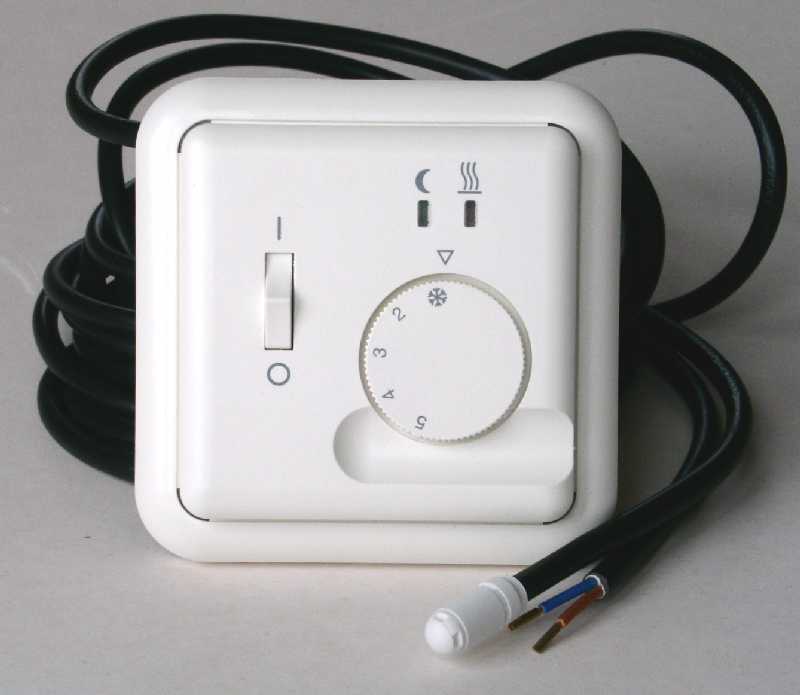
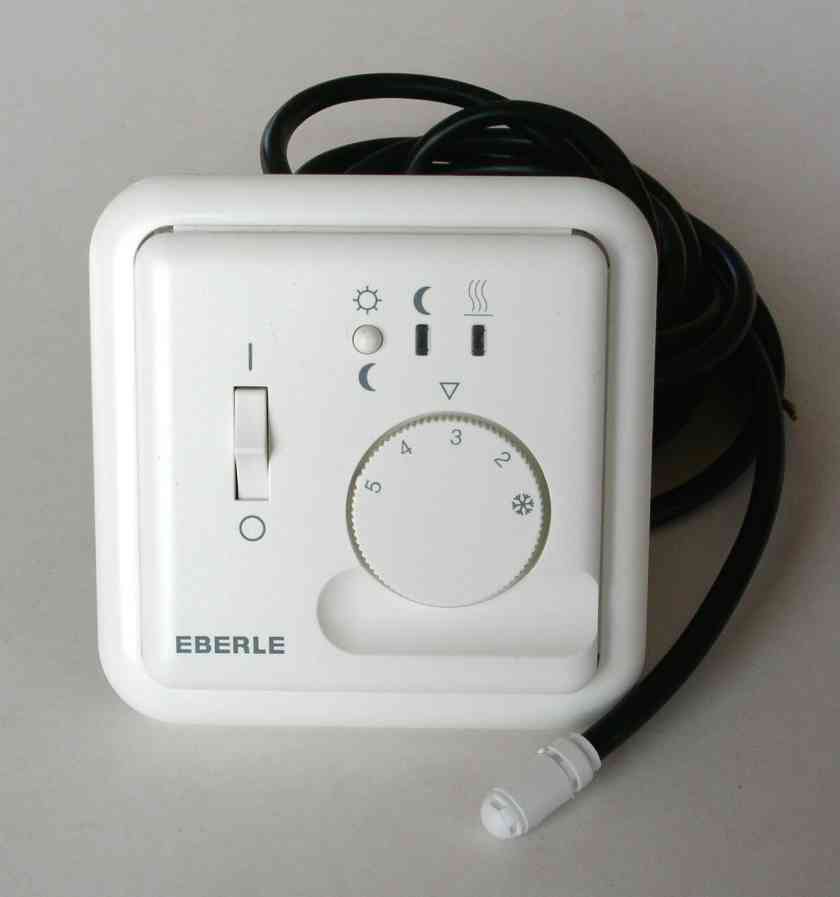
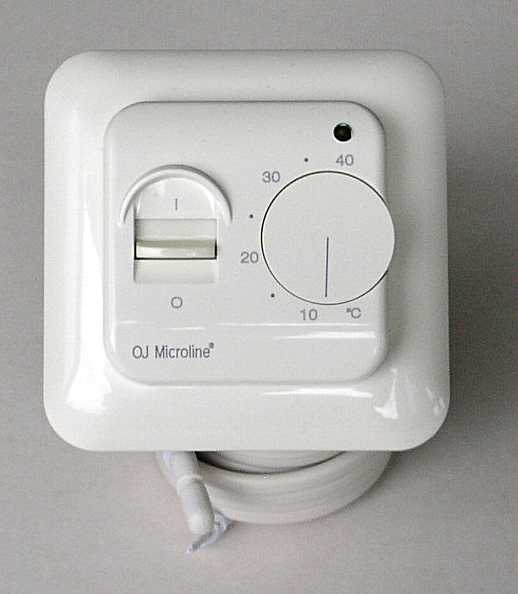
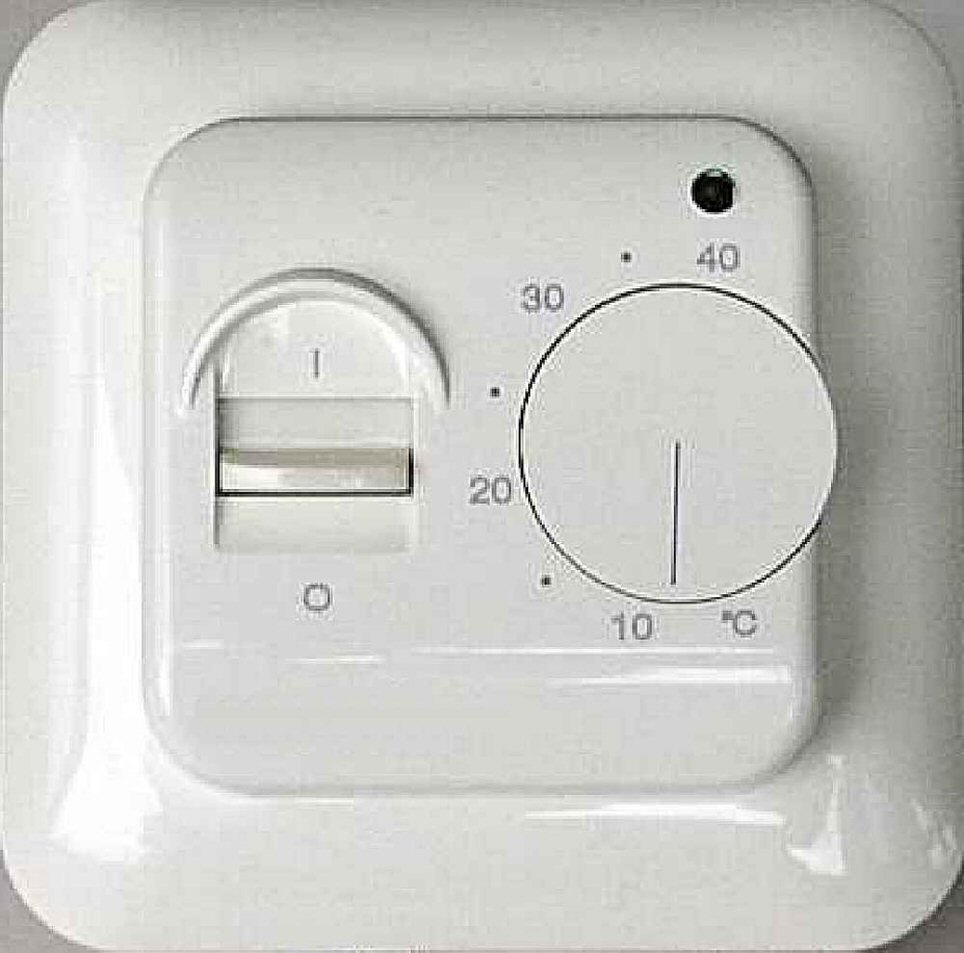
embedded types !
digital daily/weekly
program
with multiple on/off switching times per day,
selflearning!!
| The low-cost all-rounder from AEG:
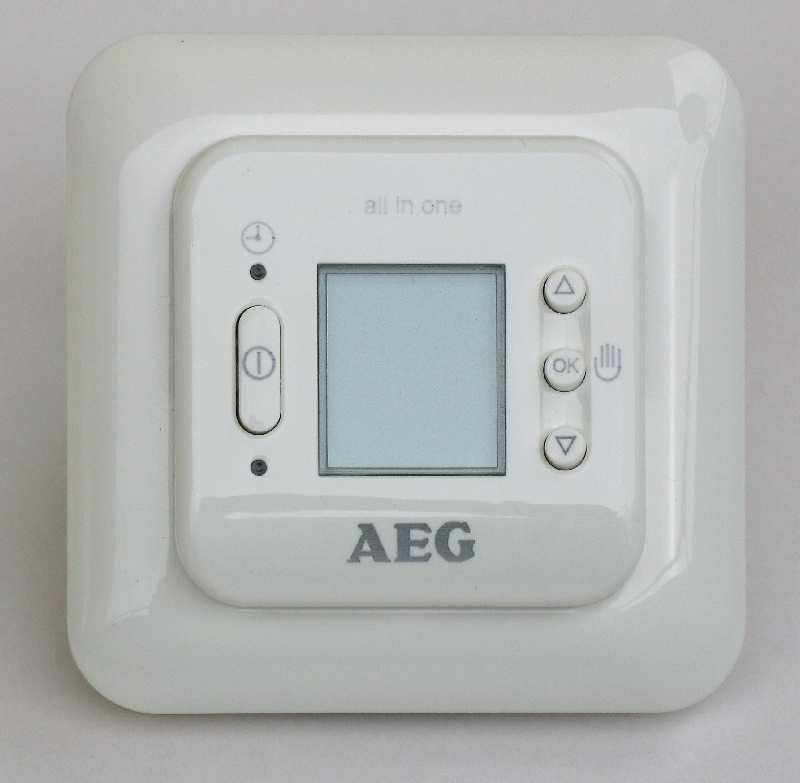
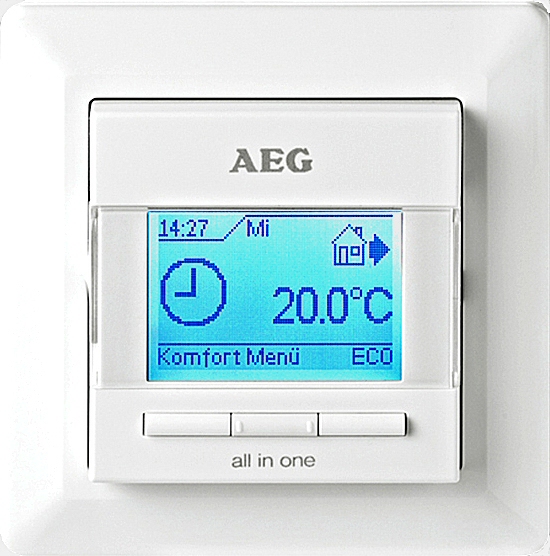
Daily/weekly timer (programs) With the advantage of being able to switch from floor to room temperature thermostat (floor temperature limited to programmed value) Wide range of settings available! AEG FRTD 902 all in one At 16 Amps, only smaller areas are possible. At 120 Watt/m² 30m² possible At 160 Watt/m² 22m²possible At 200 Watt/m² 18m² possible Larger areas possible with power protection!
You get 2 devices in
a
single unit (only AEG)
The default setting is
floor
temperature regulation!! Wide range of setting options, please read carefully! Features:
|
The low-cost all-rounder only from
Soldron: Daily/weekly timer switch (programs) With the advantage of being able to switch from floor to room temperature thermostat (floor temperature limited to programmed value) Wide range of settings available! OJ OCC2 OCD2 1999 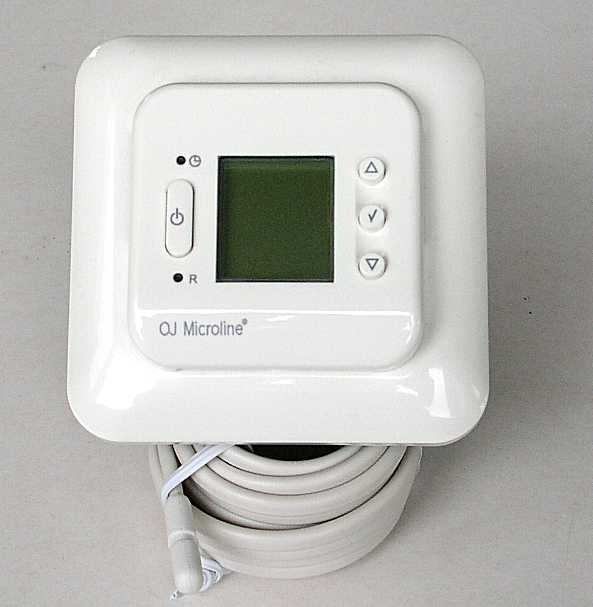 At 16 Amps, only smaller areas are possible. At 120 Watt/m² 30m² possible At 160 Watt/m² 22m²possible At 200 Watt/m² 18m² possible Larger areas possible with power protection!
You get 2 devices in
a
single unit (only available from Soldron)
The default setting is
floor
temperature regulation!! Wide range of setting options, please read carefully! Features:
|
The low-cost all-rounder:
Daily/weekly timer switch (programs) With the advantage of being able to switch from floor to room temperature thermostat (floor temperature limited to programmed value) Wide range of settings available! TC RaychemT2 DigiTemp PLUS° Timer Thermostat for floor heatingRaychem T2 TC 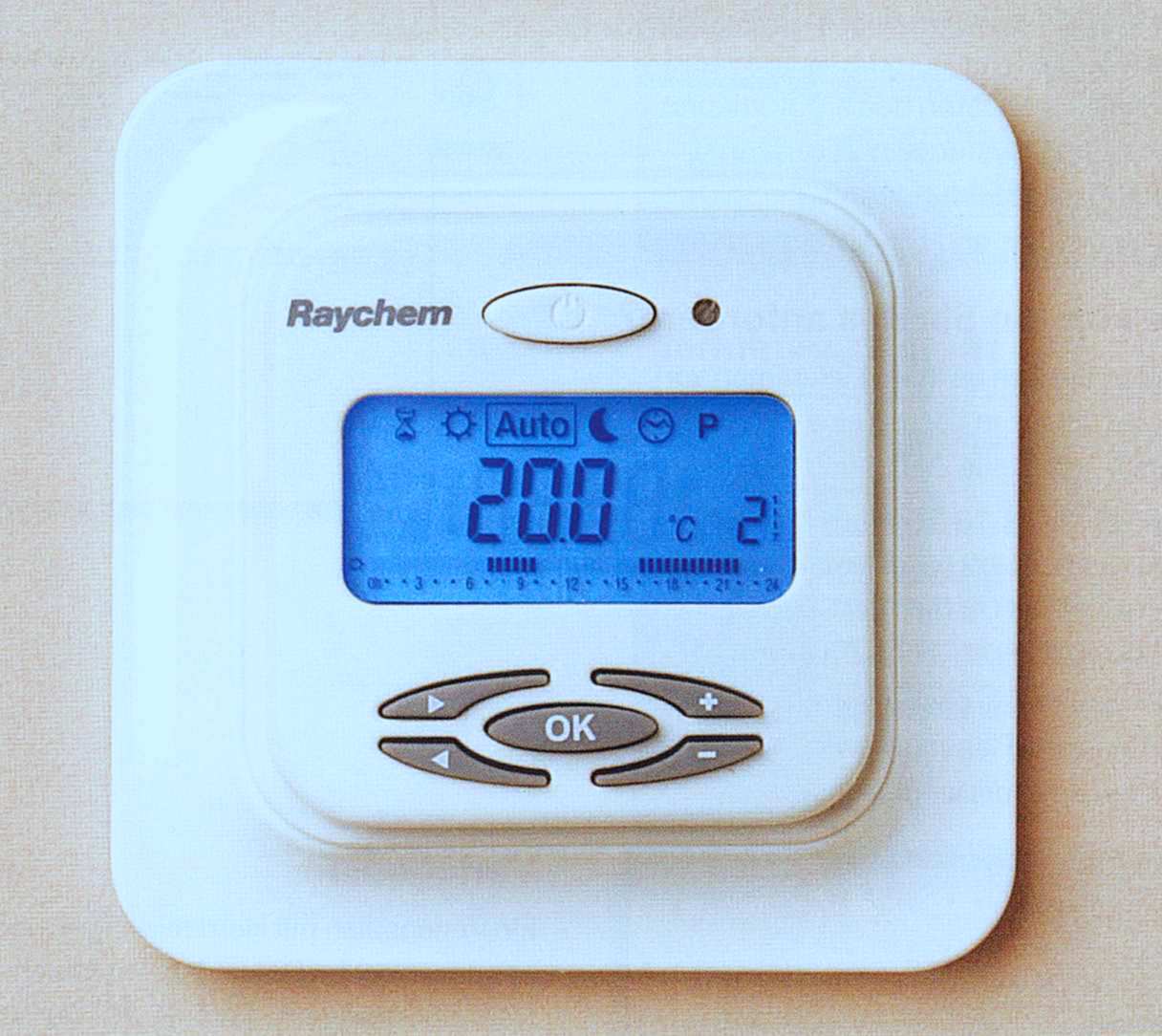 At 13 Amps, only smaller areas are possible.
Wide range of setting options, please read carefully! Features:
to match switch range:
|
NEW from Eberle Invensys again a low-cost all-rounder: Daily/weekly timer (programs) Digital Clock-thermostat Wide range of settings available! 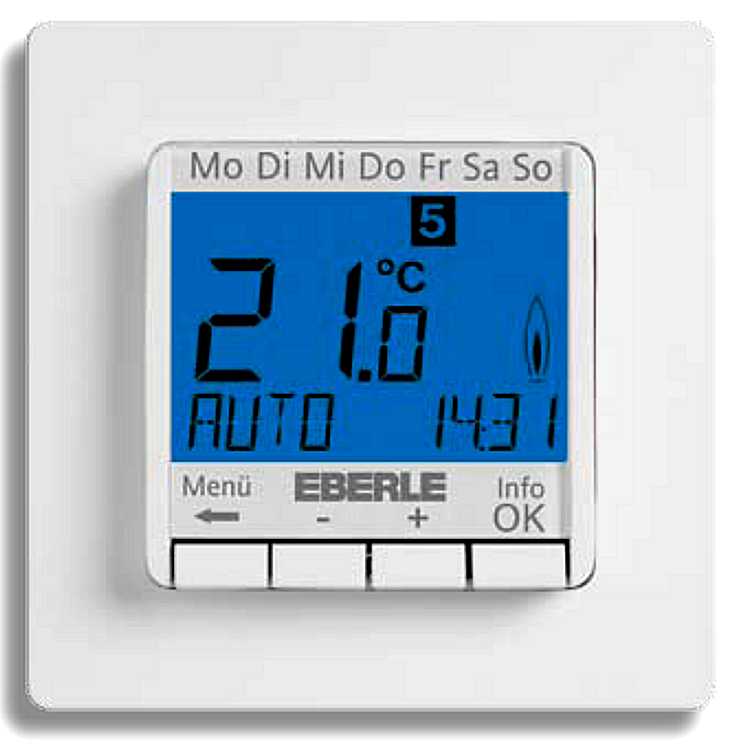 EBERLE FIT WEISS 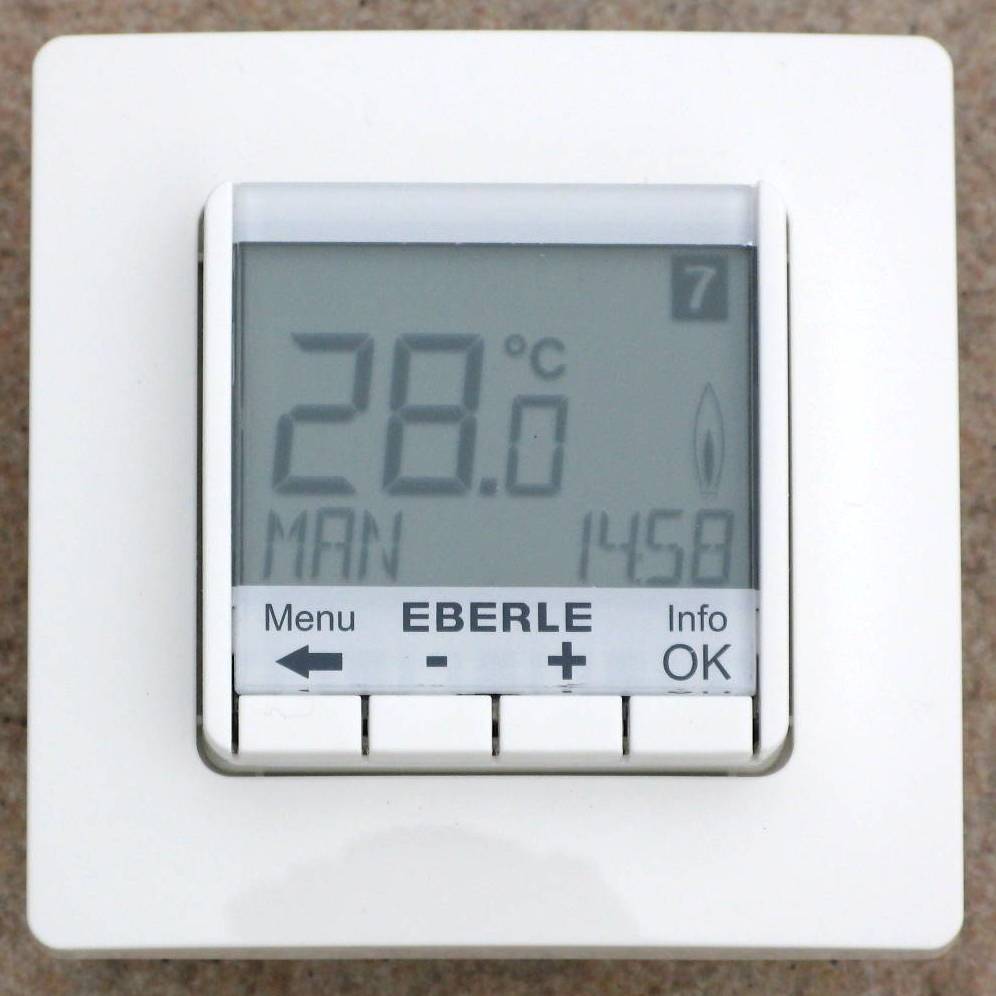 EBERLE FIT GRÜN 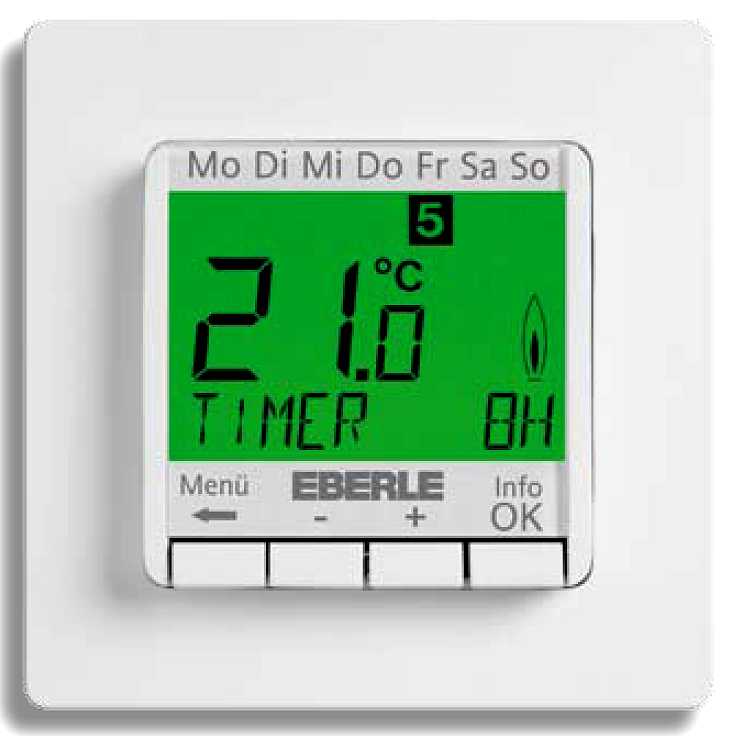 EBERLE FIT GRÜN 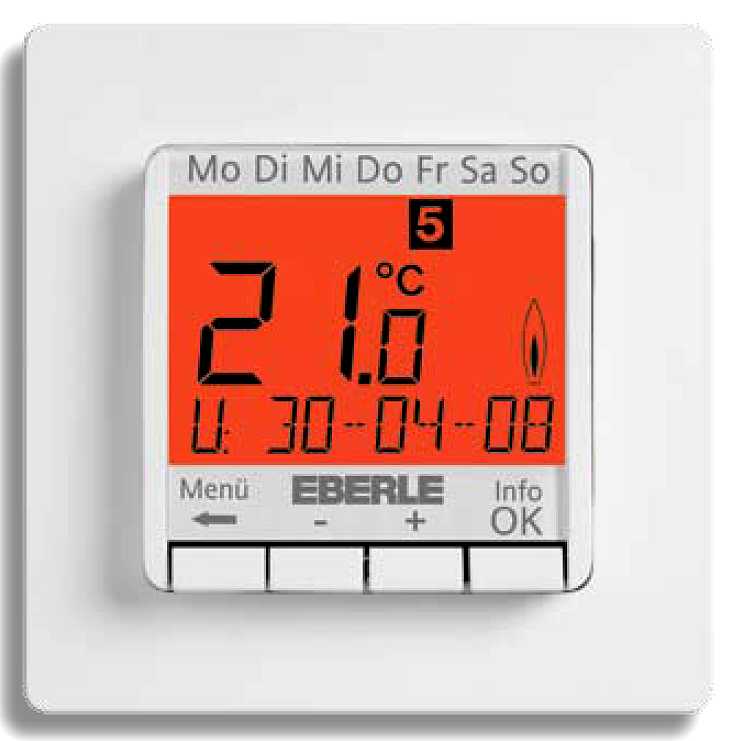 At 16 Amps, only smaller areas are possible. At 120 Watt/m² 30m² possible At 160 Watt/m² 22m²possible At 200 Watt/m² 18m² possible Larger areas possible with power protection! FIT controller – ideal energy saver for all heating systems
Building owners, developers and renovators are constantly looking for ways of conserving energy – and saving money. For this reason we extended our product range with the addition of the FIT programmable thermostat for individual room temperature control. Technical
[ EASY TO ADAPT TO DIFFERENT HEATING APPLICATIONS ] › Control mode PWM or ON / OFF › PWM-cycle time adjustable › Always provides the minimum fl oor temperature (Ceramic Stove Controller FITnp 3L) › Minimum and maximum fl oor temperature (limiter variant FITnp 3L) › Switch-on delay, e.g. for boilers › Heating or cooling mode, suitable for NC valves › Valve protection for hydronic systems › Wallpaper thickness adjustment › Outstanding design › Dimensions 50 x 50 [ OPTIMISED ENERGY SAVING ] › ECO-Input 2 is active, it will be adjusted to the confi gurable temperature e.g. night set-back › Time limit for manually changed temperature › Shorttime Timer (Party) function: specifi c temperature for confi gurable duration › Monitoring of energy consumption (heating time x cost) e.g. for the last 2 days, week, month, year › Range limits for adjusting max. and min. temperature › Display of temperature adjustable › OFF Function › Frost protection [ PROGRAMMING IS NOW CHILD‘S PLAY ] › Very large LCD with backlight › Easy programming due to one line of scrolling text (menu items, text advice) › Easy to change between 2 temperatures (Comfort, Set-back) › Armchair programming (with removed display unit) › Operating language can be selected › Access protection for children › Separate reset of user and installer settings [ APPLICATIONS ] › Room heating (remote sensor optional) › Electric underfl oor heating › Room heating via underfl oor (minimum and maximum limiter e.g. Ceramic Stove Controller or electric room heating) › Can be applied for “Only Heating” and “Only Cooling” |
The low-cost all-rounder:
Daily/weekly timer (programs) With the advantage of being able to switch from floor to room temperature thermostat (floor temperature limited to programmed value) Wide range of settings available! EB 52535 INSTAT8 10A 2400W 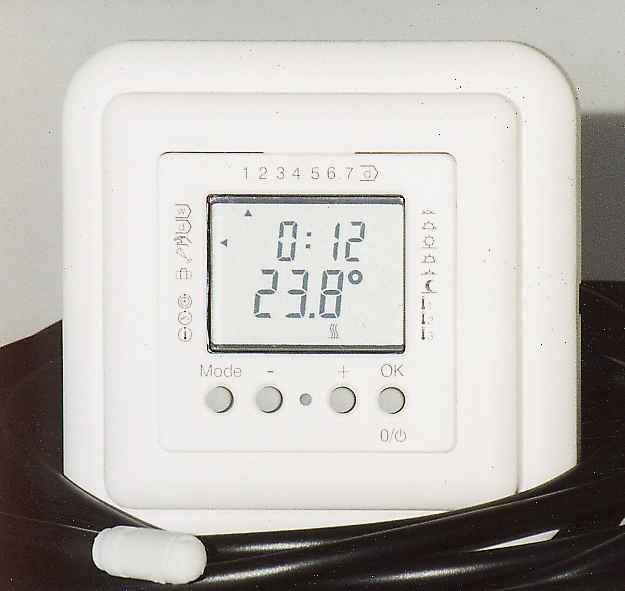 At 8/10 Amps, only smaller areas are possible. Wide range of setting options, please read carefully! Features:
|
The low-cost all-rounder: extra thinn sensor only 3mm perfect at laminat heating Daily/weekly timer (programs) With the advantage of being able to switch from floor to room temperature thermostat (floor temperature limited to programmed value) Wide range of settings available! S-DRON 100 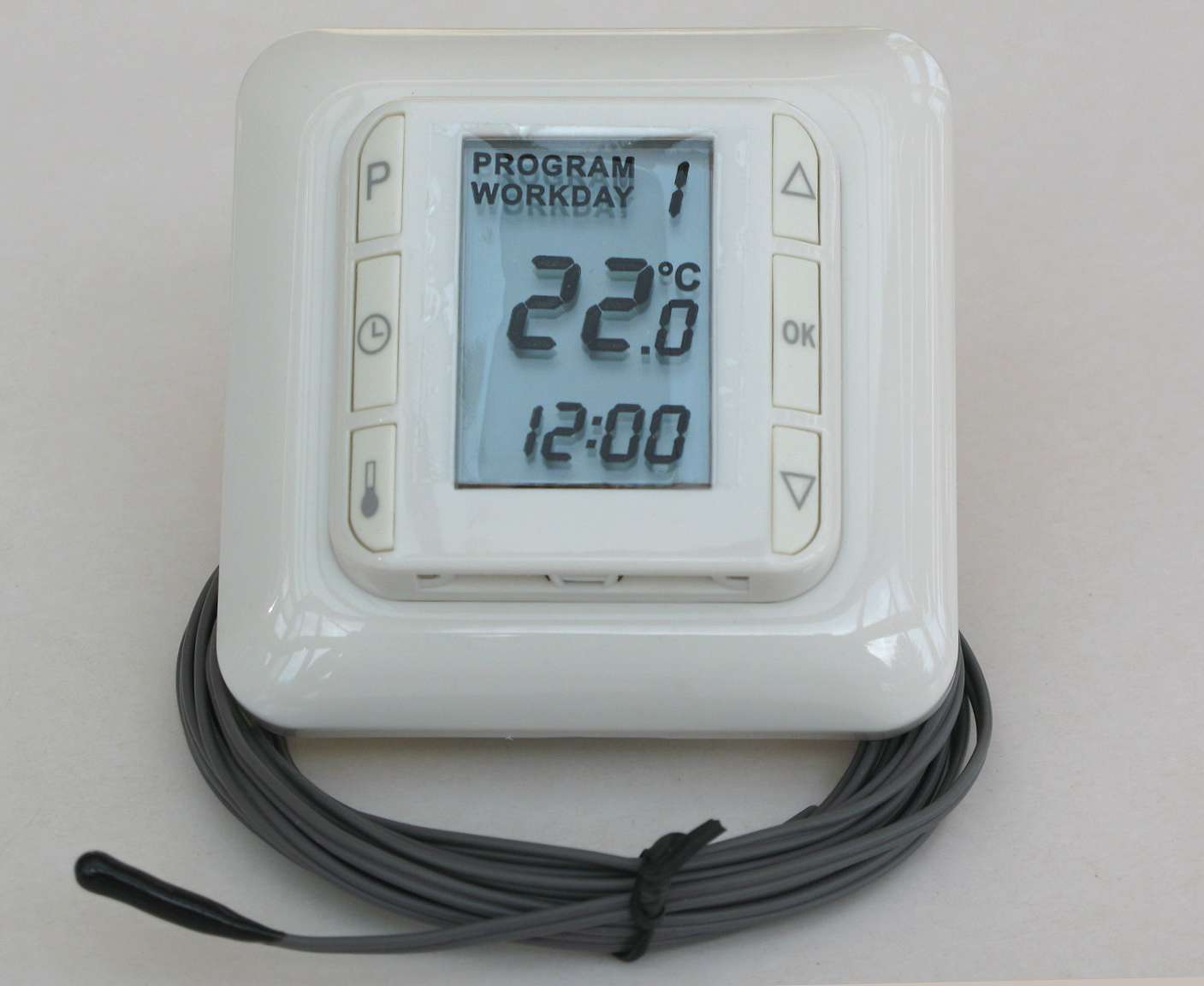 At 16 Amps, only smaller areas are possible. At 120 Watt/m² 30m² possible At 160 Watt/m² 22m²possible At 200 Watt/m² 18m² possible Larger areas possible with power protection!
You get 2 devices in
a
single unit Ideal for
Wide range of setting options, please read carefully! Features:
|
| The low-cost all-rounder:
Daily/weekly timer (programs) With the advantage of being able to switch from floor to room temperature thermostat (floor temperature limited to programmed value) Wide range of settings available! DRON-O-SOL 16 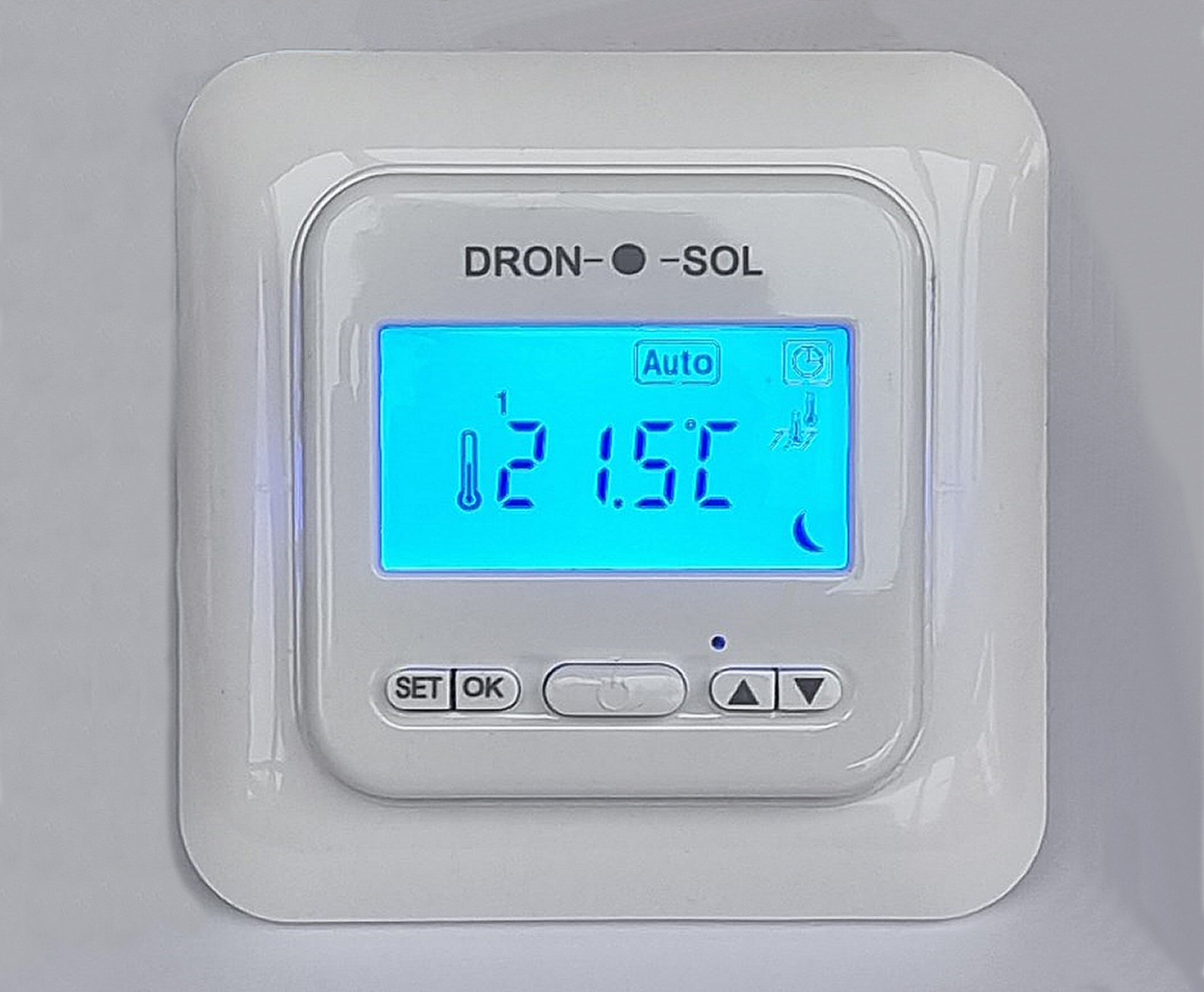 At 16 Amps, only smaller areas are possible. At 120 Watt/m² 30m² possible At 160 Watt/m² 22m²possible At 200 Watt/m² 18m² possible Larger areas possible with power protection!
You get 2 devices in
a
single unit
Wide range of setting options, please read carefully! Features:
Tech Data, DRON-O-SOL: |
The low-cost all-rounder:
Daily/weekly timer switch (programs) With the advantage of being able to switch from floor to room temperature thermostat (floor temperature limited to programmed value) Wide range of settings available! Alre 130 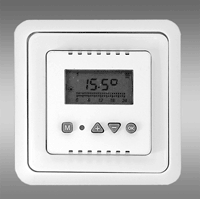 At 16 Amps, only smaller areas are possible. At 120 Watt/m² 30m² possible At 160 Watt/m² 22m²possible At 200 Watt/m² 18m² possible Larger areas possible with power protection!
You get 2 devices in
a
single unit
Wide range of setting options, please read carefully! Features:
|
NEW again a low-cost all-rounder: Daily/weekly timer (programs) With the advantage of being able to switch from floor to room temperature thermostat (floor temperature limited to programmed value) Wide range of settings available! E-DRON-B blue back light LCD Display 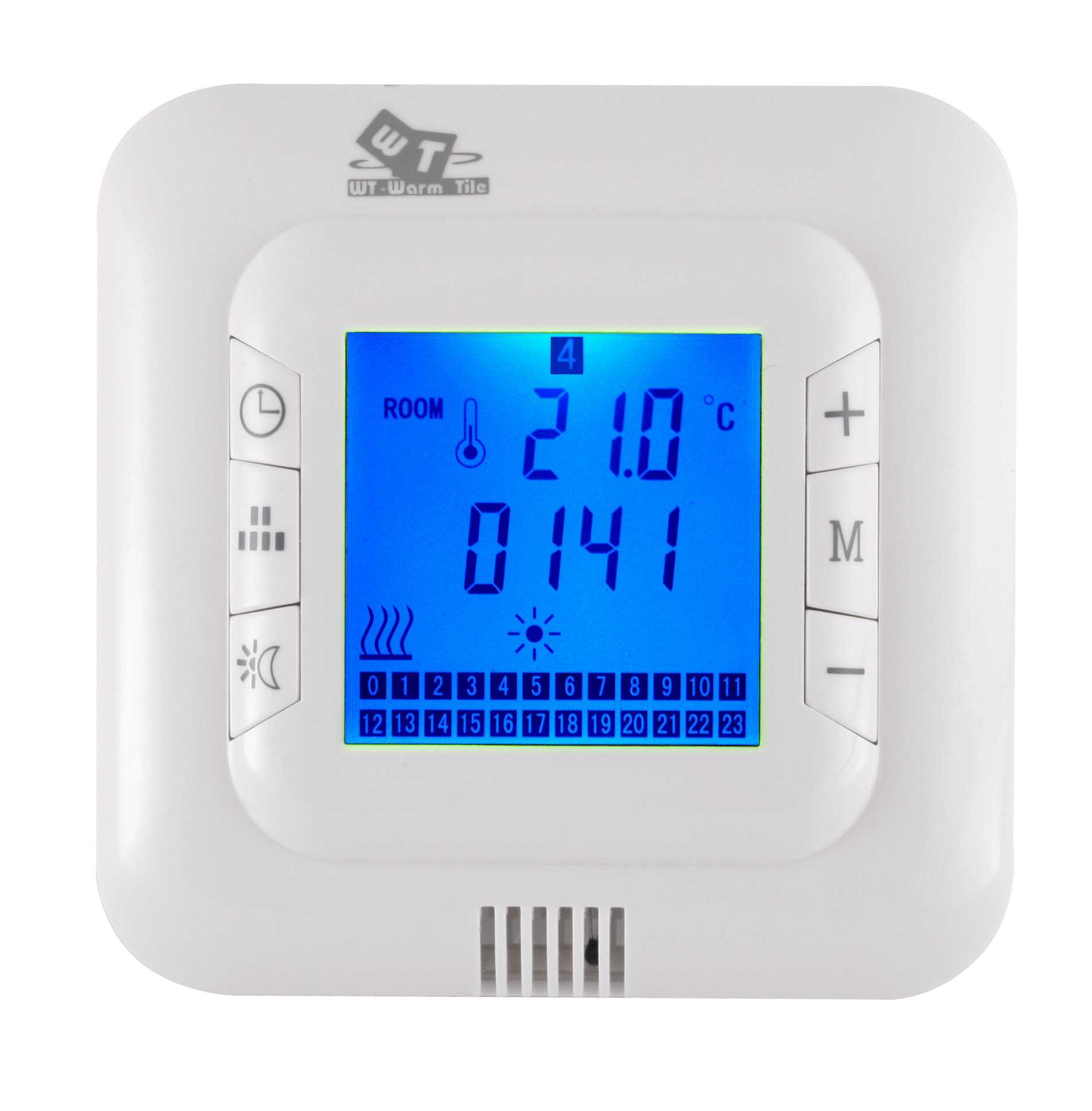 E-DRON-W 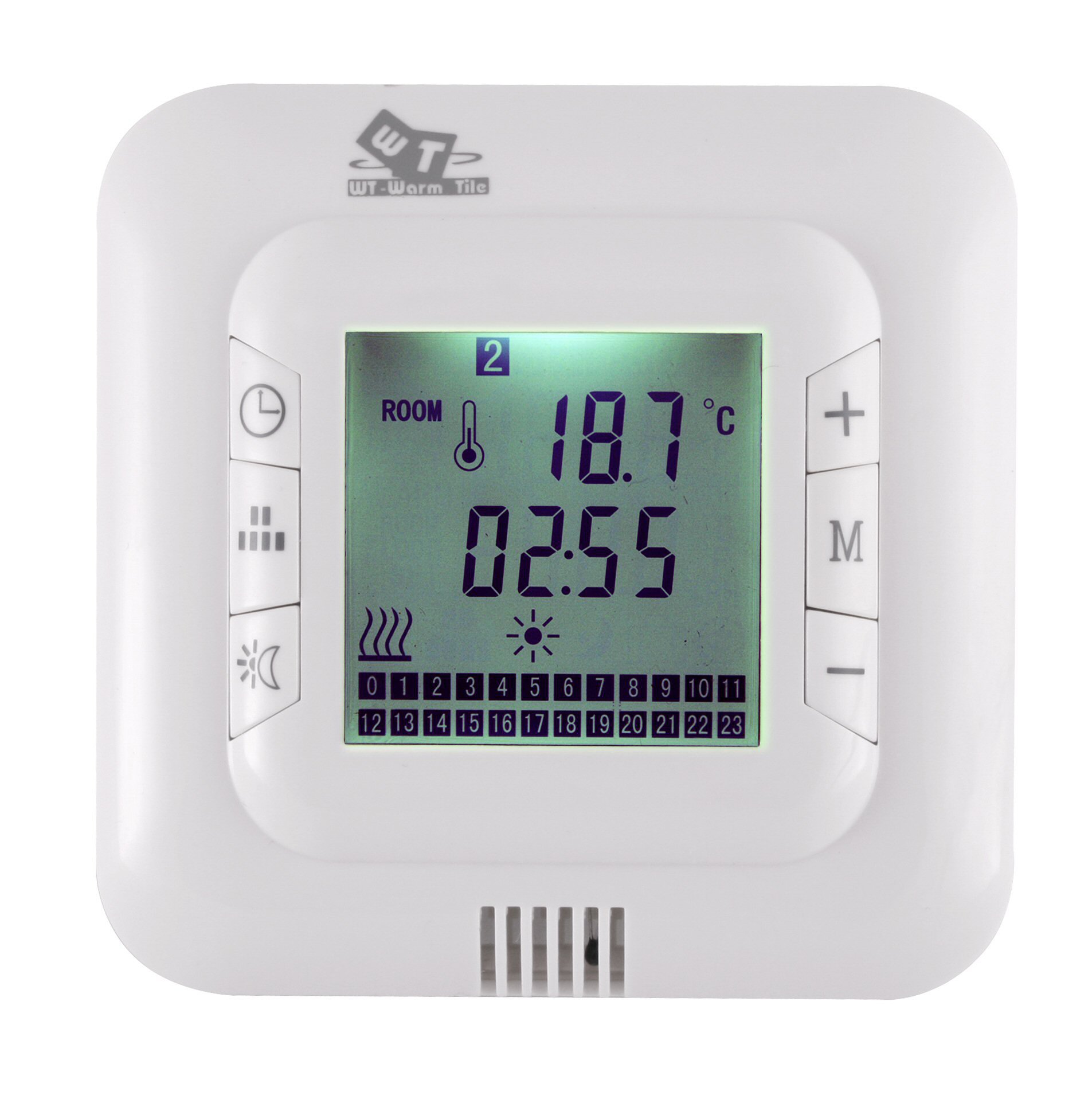 E-DRON G 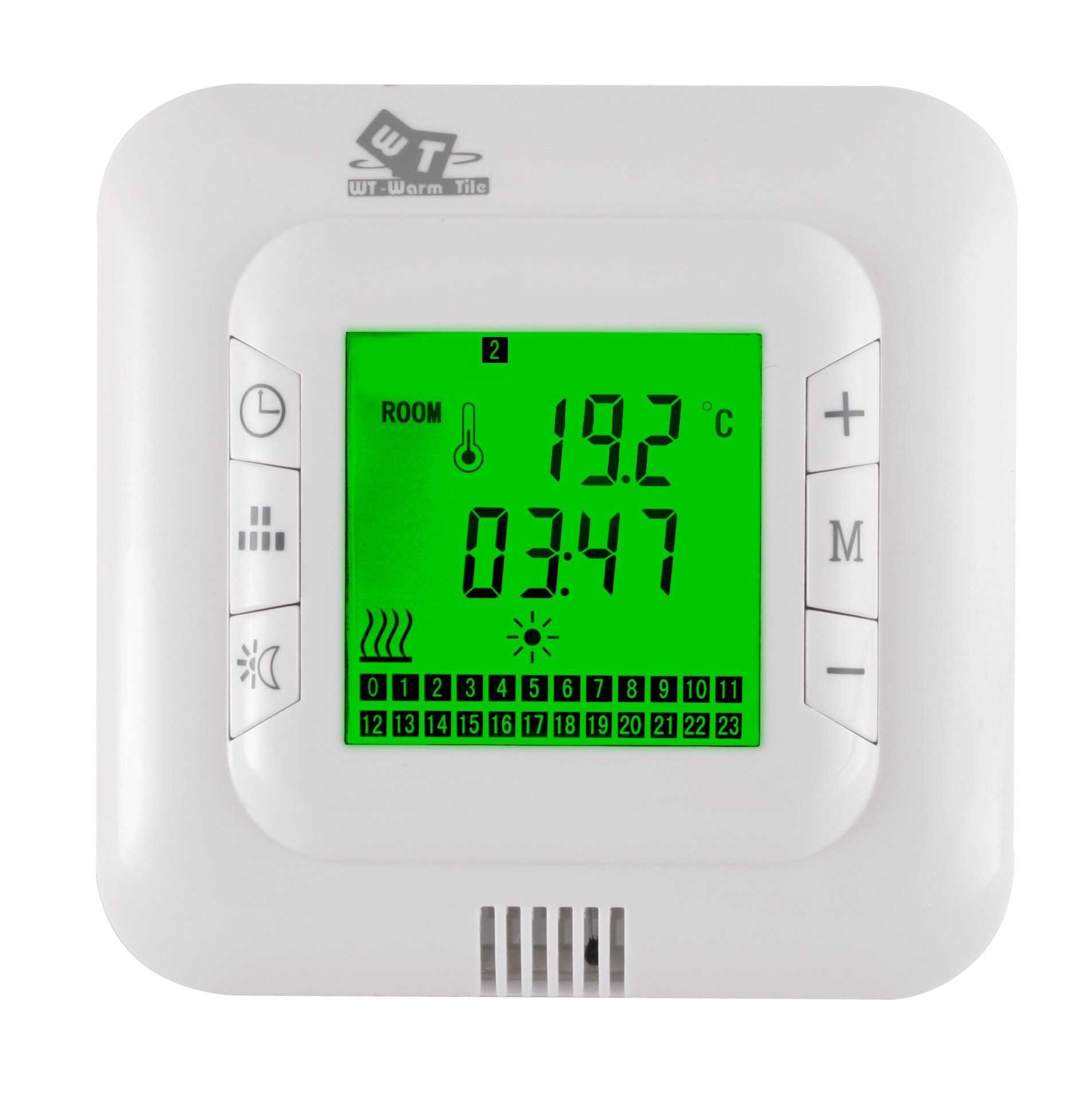 At 16 Amps, only smaller areas are possible. At 120 Watt/m² 30m² possible At 160 Watt/m² 22m²possible At 200 Watt/m² 18m² possible Larger areas possible with power protection!
You get 2 devices in
a
single unit
Wide range of setting options, please read carefully! Features:
Built-in
type,
smart and secure
Tech Data, E-DRON: |
NEW again a low-cost all-rounder: Daily/weekly timer (programs) With the advantage of being able to switch from floor to room temperature thermostat (floor temperature limited to programmed value) Wide range of settings available! NEW EB UTR-75 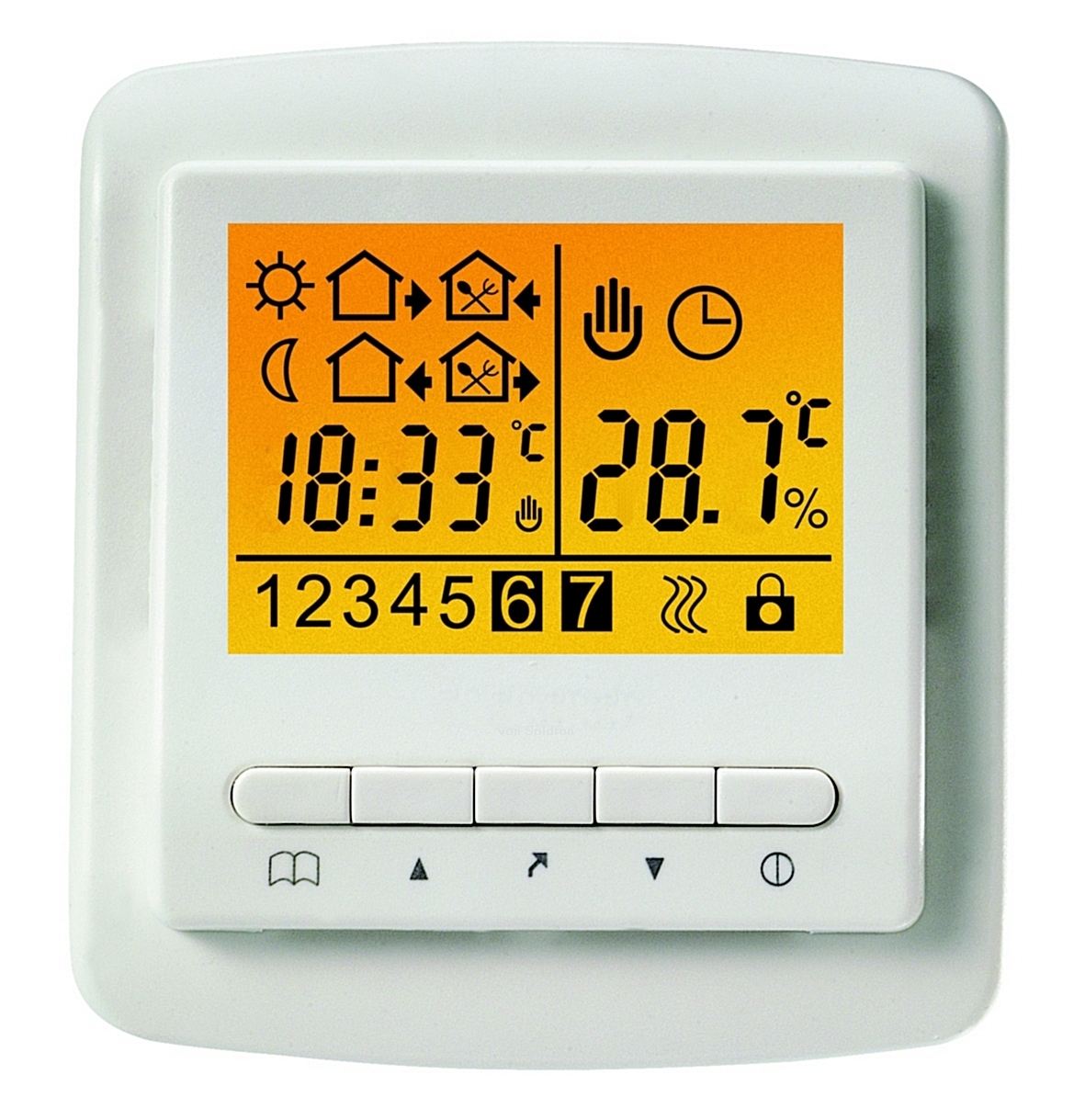 At 16 Amps, only smaller areas are possible. At 120 Watt/m² 30m² possible At 160 Watt/m² 22m²possible At 200 Watt/m² 18m² possible Larger areas possible with power protection!
The UTR 75 offered here can perform everything in a single unit (floor thermostat can be set to 'room control with limitation' as factory setting),
User
Manual |
NEW again a low-cost all-rounder: Daily/weekly timer (programs) With the advantage of being able to switch from floor to room temperature thermostat (floor temperature limited to programmed value) Wide range of settings available! NEW EB UTR-51 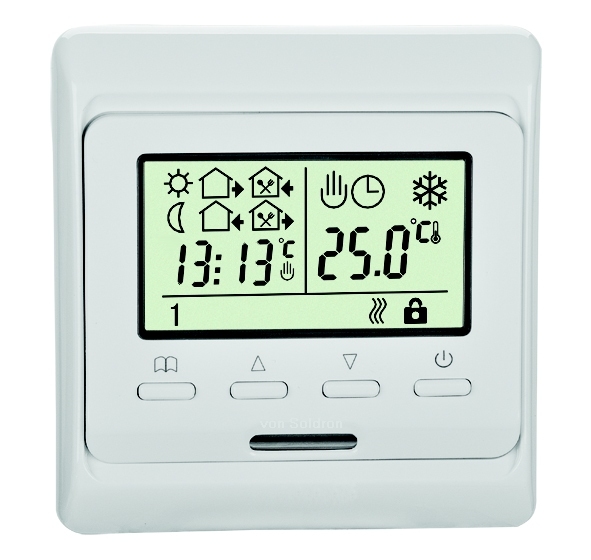 At 16 Amps, only smaller areas are possible. At 120 Watt/m² 30m² possible At 160 Watt/m² 22m²possible At 200 Watt/m² 18m² possible Larger areas possible with power protection!
The UTR 51 offered here can perform everything in a single unit (floor thermostat can be set to 'room control with limitation' as factory setting),
User
Manual |
NEW again a low-cost all-rounder: Daily/weekly timer (programs) With the advantage of being able to switch from floor to room temperature thermostat (floor temperature limited to programmed value) Wide range of settings available! NEW EB UTR-91 touch sreen 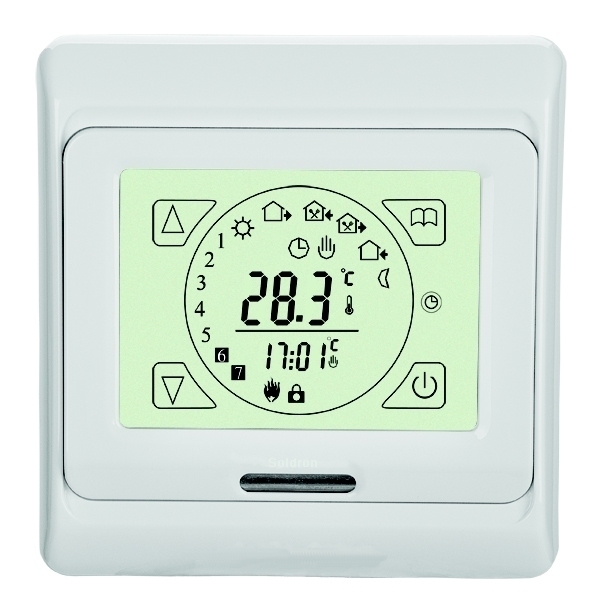 At 16 Amps, only smaller areas are possible. At 120 Watt/m² 30m² possible At 160 Watt/m² 22m²possible At 200 Watt/m² 18m² possible Larger areas possible with power protection! You get 2 devices in a single unit The UTR 91 w offered here can perform everything in a single unit (floor thermostat can be set to 'room control with limitation' as factory setting),
User
Manual |
NEW again a low-cost all-rounder: Daily/weekly timer (programs) With the advantage of being able to switch from floor to room temperature thermostat (floor temperature limited to programmed value) Wide range of settings available! NEW EB UTR-89 touch sreen 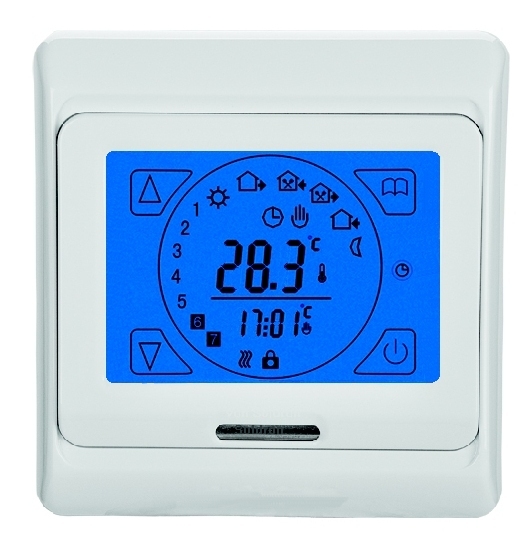 At 16 Amps, only smaller areas are possible. At 120 Watt/m² 30m² possible At 160 Watt/m² 22m²possible At 200 Watt/m² 18m² possible Larger areas possible with power protection! You get 2 devices in a single unit The UTR 91 b offered here can perform everything in a single unit (floor thermostat can be set to 'room control with limitation' as factory setting),
User
Manual |
NEW again a low-cost all-rounder: Daily/weekly timer (programs) With the advantage of being able to switch from floor to room temperature thermostat (floor temperature limited to programmed value) Wide range of settings available! NEW EB UTR-309 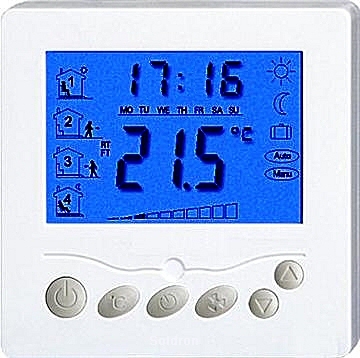 At 16 Amps, only smaller areas are possible. At 120 Watt/m² 30m² possible At 160 Watt/m² 22m²possible At 200 Watt/m² 18m² possible Larger areas possible with power protection! You get 2 devices in a single unit The UTR 309 offered here can perform everything in a single unit (floor thermostat can be set to 'room control with limitation' as factory setting),
1) Large LCD screen, attractive design 2) Easy to program and install 3) Protected memory, no batteries required 4) Fahrenheit and centigrade temperature mode selectable 5) Comfort / economy / vacation set-point selectable 6) 4 daily programs with separate 7 day settings 7) Automatic memory with manual override switch 8) Clock display 9) Week day display 10) Energy saving 11) Supplied with floor sensor User
Manual |
|
NEW again a low-cost all-rounder: Coloured touchscreen Room or floor thermostat in "one device" Daily/weekly timer (programs) With the advantage of being able to switch from floor to room temperature thermostat (floor temperature limited to programmed value) Wide range of settings available! NEW EB UTR CTS 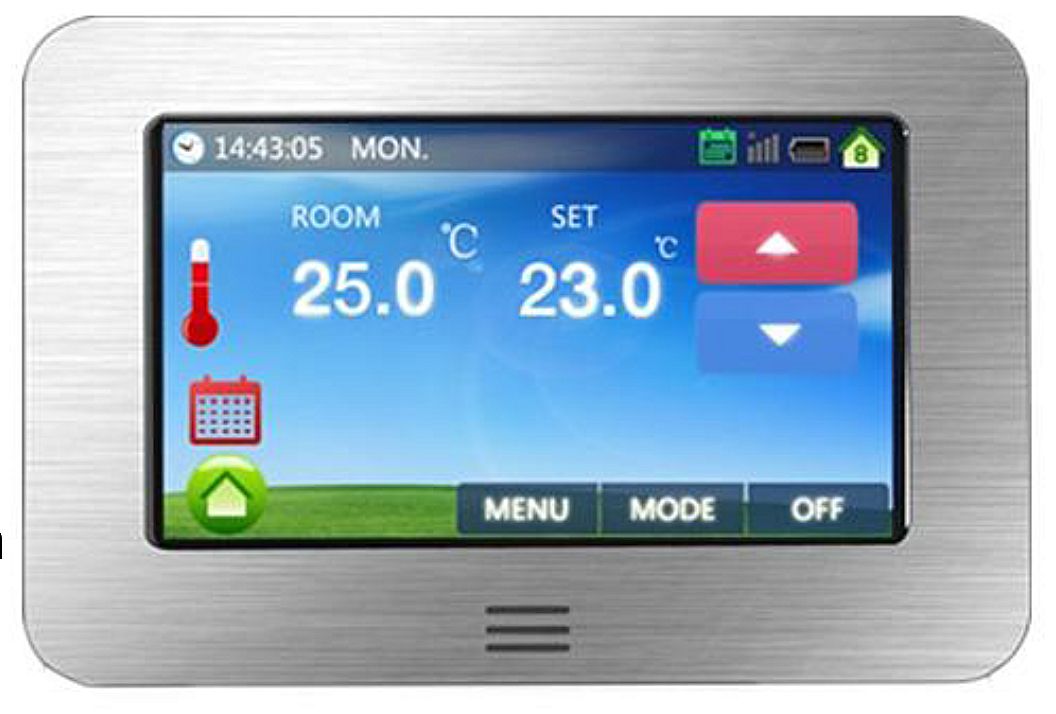 At 16 Amps, only smaller areas are possible. At 120 Watt/m² 30m² possible At 160 Watt/m² 22m²possible At 200 Watt/m² 18m² possible Larger areas possible with power protection! You get 2 devices in a single unit The E-DRON 16 offered here can perform everything in a single unit (floor thermostat can be set to 'room control with limitation' as factory setting),
Control: color digital display: TFT Mounting: Standard Flush (68mm socket) 2 years warranty color white (Dimensions 130 mm x 88 mm / W x H)  User
Manual
User
Manual
User
Manual
User
Manual |
NEW again a low-cost all-rounder: Daily/weekly timer (programs) With the advantage of being able to switch from floor to room temperature thermostat (floor temperature limited to programmed value) Wide range of settings available! NEW EB UTR-07 b touch sreen 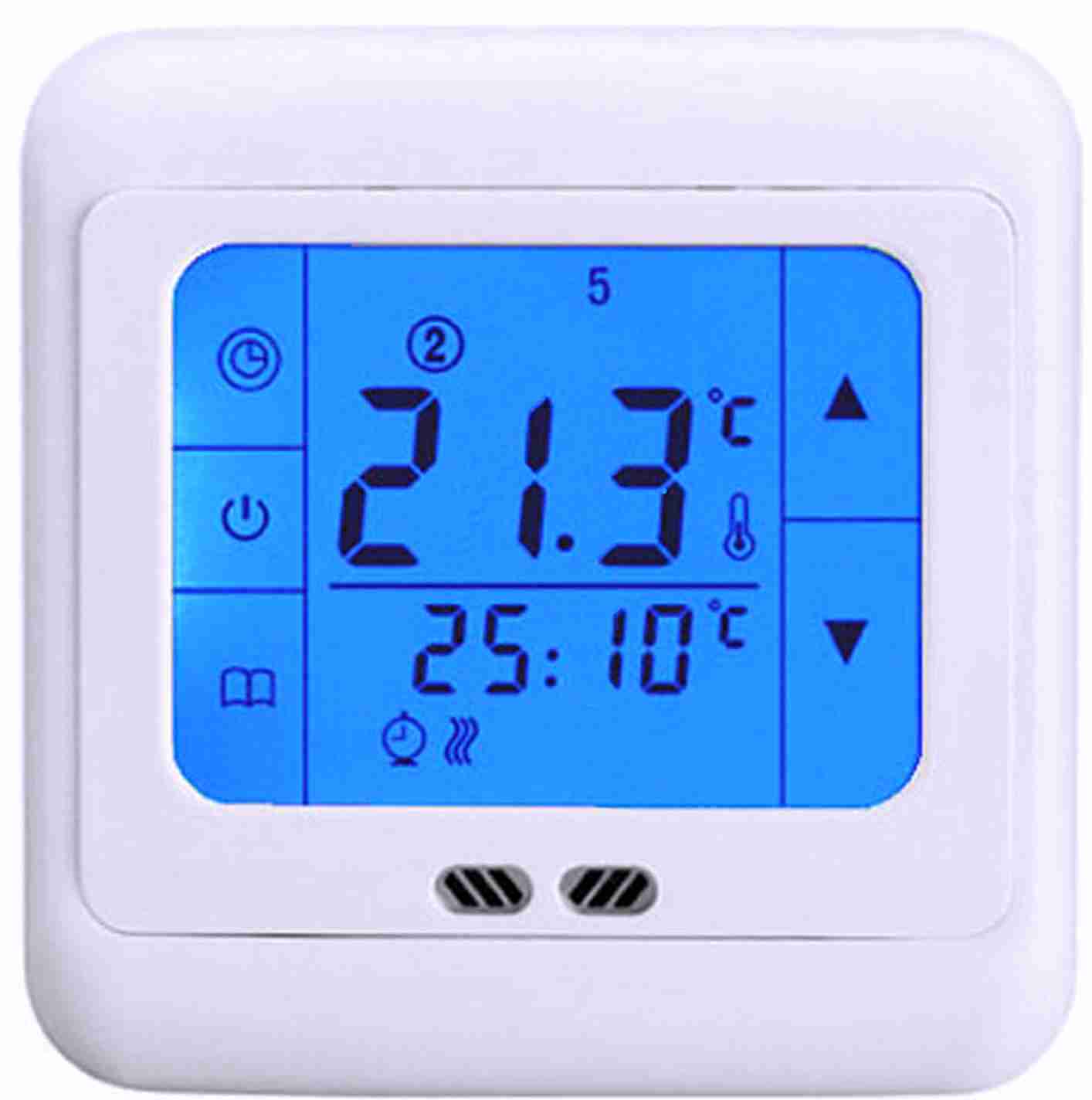 At 16 Amps, only smaller areas are possible. At 120 Watt/m² 30m² possible At 160 Watt/m² 22m²possible At 200 Watt/m² 18m² possible Larger areas possible with power protection! You get 2 devices in a single unit The UTR 07 offered here can perform everything in a single unit (floor thermostat can be set to 'room control with limitation' as factory setting),
User
Manual |
NEW again a low-cost all-rounder: Daily/weekly timer (programs) With the advantage of being able to switch from floor to room temperature thermostat (floor temperature limited to programmed value) Wide range of settings available! NEW EB UTR-08 b 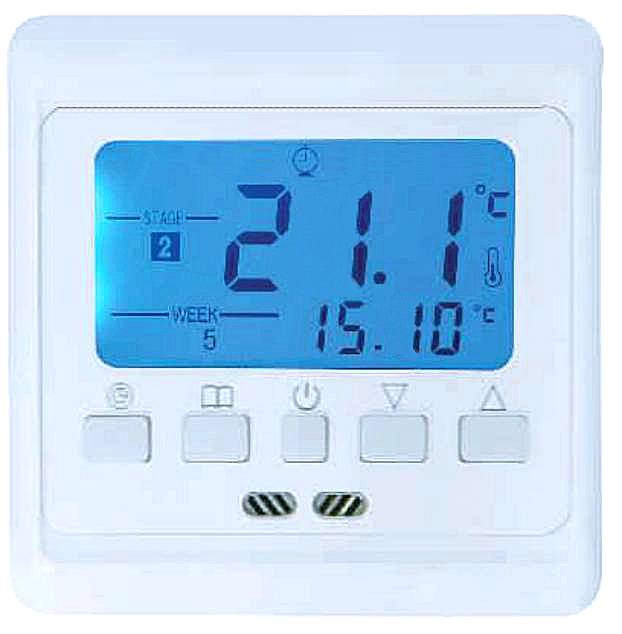 At 16 Amps, only smaller areas are possible. At 120 Watt/m² 30m² possible At 160 Watt/m² 22m²possible At 200 Watt/m² 18m² possible Larger areas possible with power protection! You get 2 devices in a single unit The UTR 08 offered here can perform everything in a single unit (floor thermostat can be set to 'room control with limitation' as factory setting),
User
Manual |
The low-cost all-rounder from AEG: Daily/weekly timer (programs) With the advantage of being able to switch from floor to room temperature thermostat (floor temperature limited to programmed value) Wide range of settings available! AEG FRTD 903 all in one At 16 Amps, only smaller areas are possible. At 120 Watt/m² 30m² possible At 160 Watt/m² 22m²possible At 200 Watt/m² 18m² possible Larger areas possible with power protection!
You get 2 devices in
a
single unit (only AEG) The default setting is
floor
temperature regulation!! Wide range of setting options, please read carefully! Features:
|
The low-cost all-rounder from Soldron: Daily/weekly timer switch (programs) With the advantage of being able to switch from floor to room temperature thermostat (floor temperature limited to programmed value) Wide range of settings available! OJ OCD4 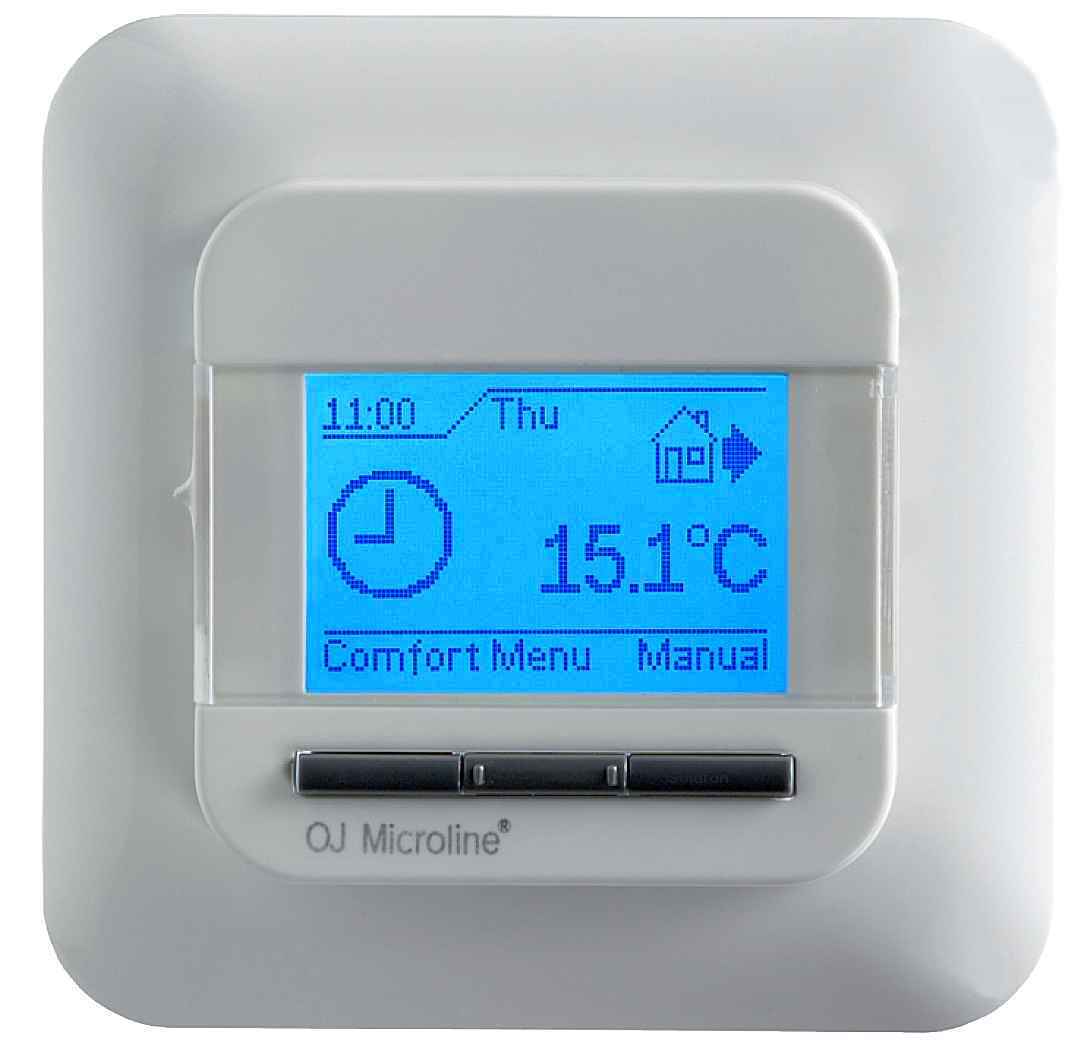 At 16 Amps, only smaller areas are possible. At 120 Watt/m² 30m² possible At 160 Watt/m² 22m²possible At 200 Watt/m² 18m² possible Larger areas possible with power protection!
You get 2 devices in
a
single unit ( available from Soldron) The default setting is
floor
temperature regulation!! Wide range of setting options, please read carefully! Features:
|
NEW again a low-cost all-rounder: Daily/weekly timer (programs) With the advantage of being able to switch from floor to room temperature thermostat (floor temperature limited to programmed value) Wide range of settings available! NEW EB DRON 70 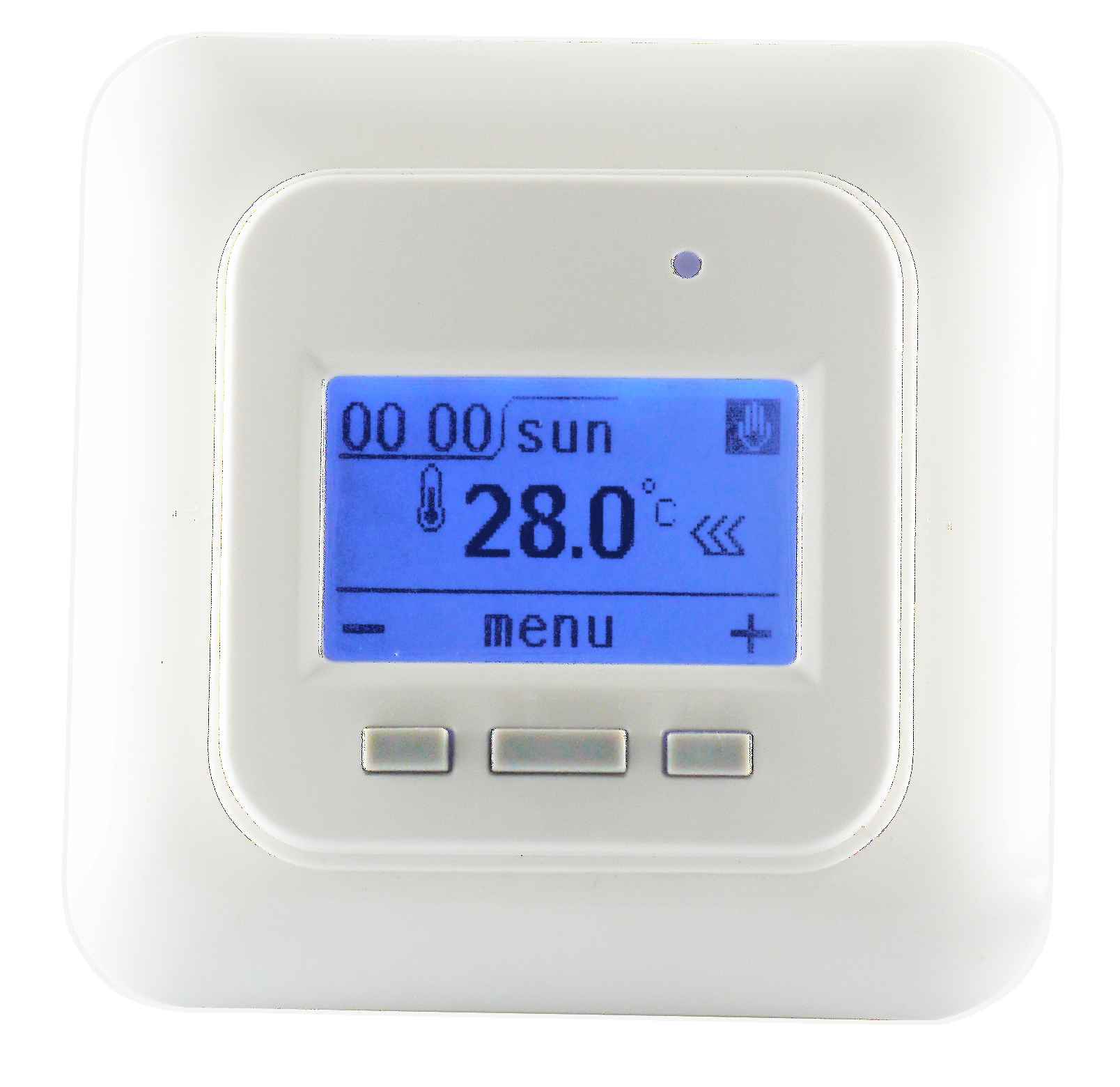 At 16 Amps, only smaller areas are possible. At 120 Watt/m² 30m² possible At 160 Watt/m² 22m²possible At 200 Watt/m² 18m² possible Larger areas possible with power protection! You get 2 devices in a single unit The DRON 70 offered here can perform everything in a single unit (floor thermostat can be set to 'room control with limitation' as factory setting),
User
Manual |
NEW again a low-cost all-rounder: Coloured touchscreen Room or floor thermostat in "one device" Daily/weekly timer (programs) With the advantage of being able to switch from floor to room temperature thermostat (floor temperature limited to programmed value) Wide range of settings available! NEW EB DRON-CTS black 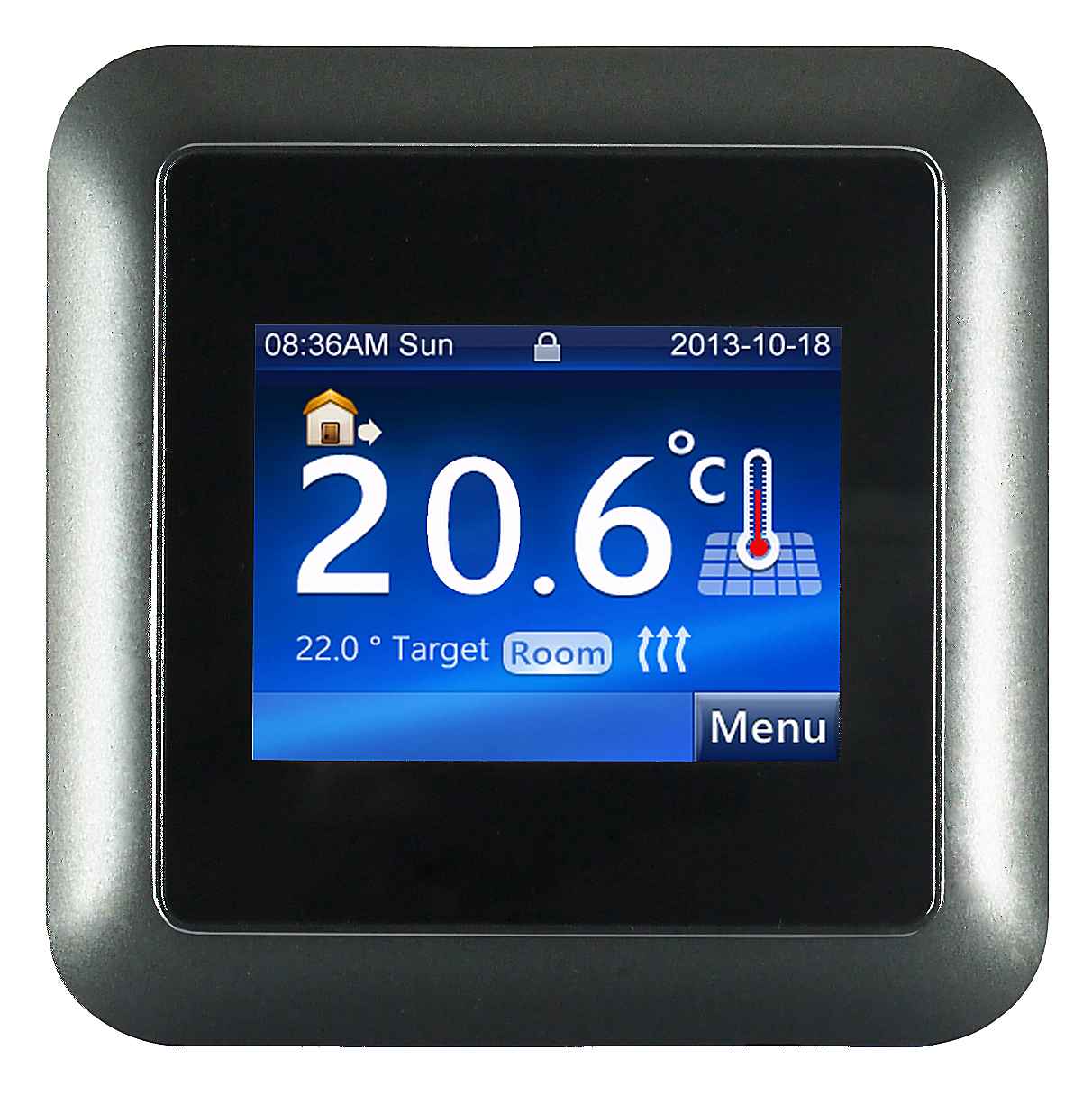 At 16 Amps, only smaller areas are possible. At 120 Watt/m² 30m² possible At 160 Watt/m² 22m²possible At 200 Watt/m² 18m² possible Larger areas possible with power protection! You get 2 devices in a single unit The E-DRON 16 offered here can perform everything in a single unit (floor thermostat can be set to 'room control with limitation' as factory setting),
Control: color digital display: TFT Mounting: Flush 2 years warranty color white (Dimensions 81 mm x 81 mm / W x H) User Manual |
NEW again a low-cost all-rounder: Coloured touchscreen Room or floor thermostat in "one device" Daily/weekly timer (programs) With the advantage of being able to switch from floor to room temperature thermostat (floor temperature limited to programmed value) Wide range of settings available! NEW EB DRON-CTS white 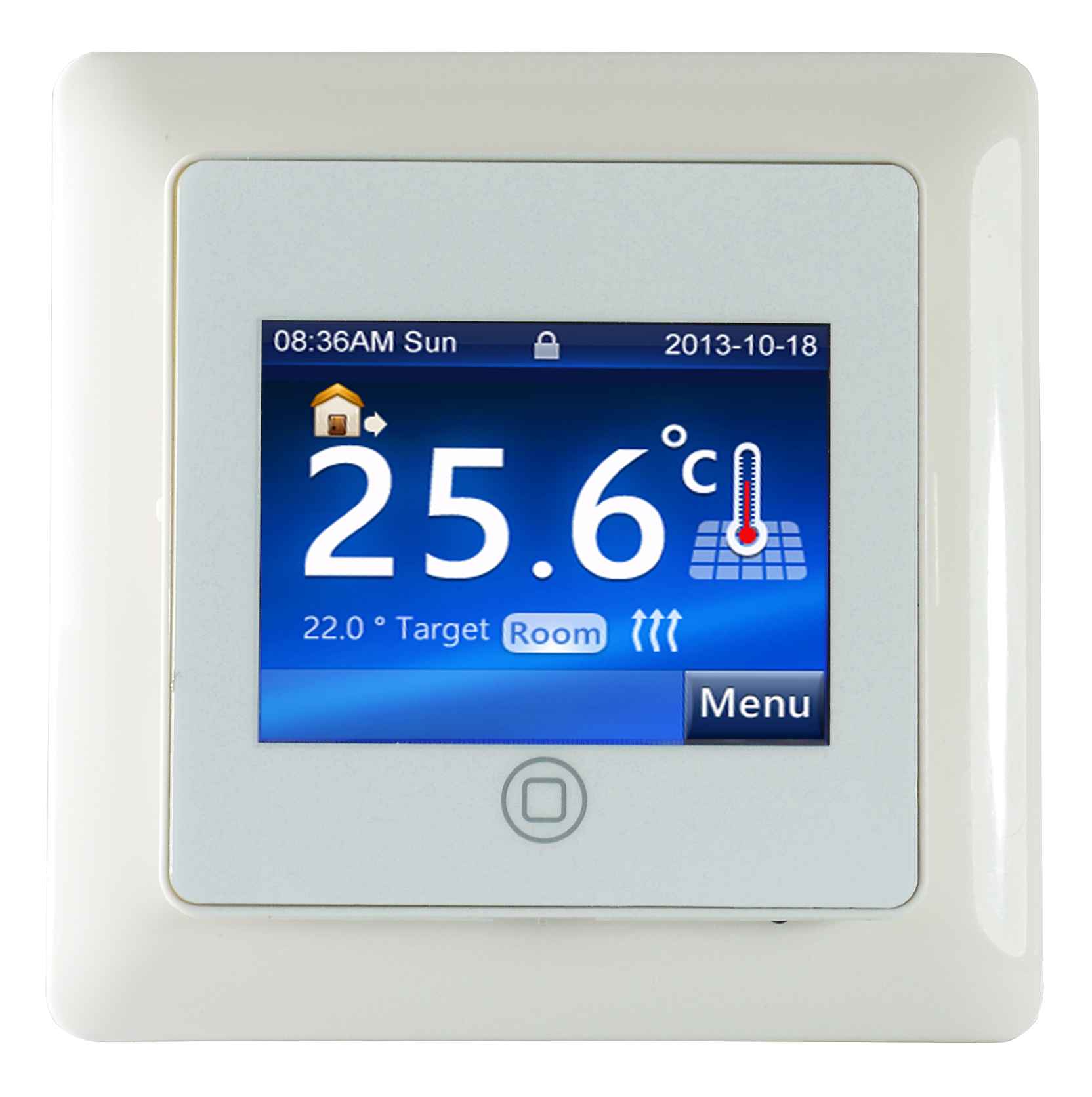 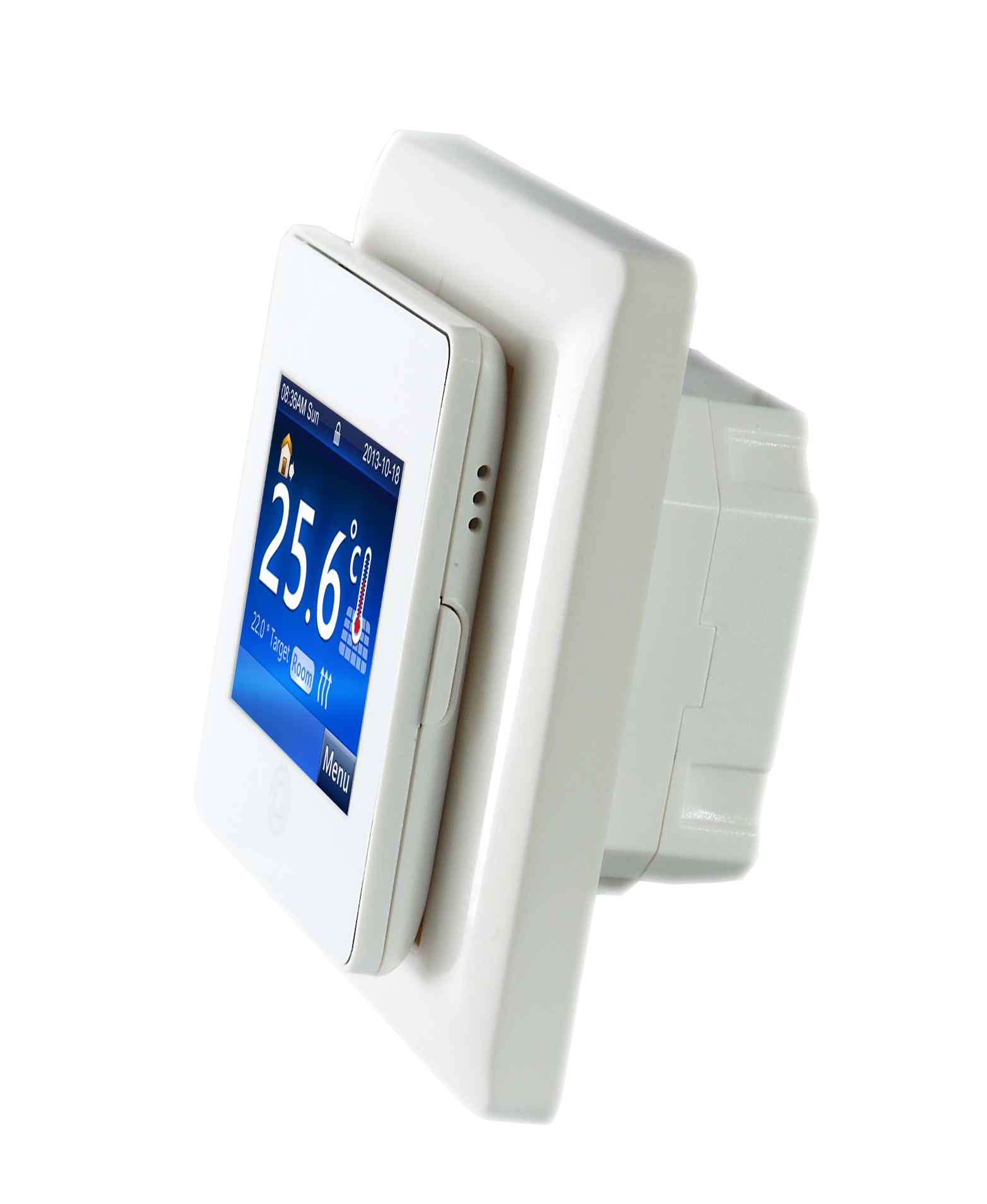 At 16 Amps, only smaller areas are possible. At 120 Watt/m² 30m² possible At 160 Watt/m² 22m²possible At 200 Watt/m² 18m² possible Larger areas possible with power protection! You get 2 devices in a single unit The E-DRON 16 offered here can perform everything in a single unit (floor thermostat can be set to 'room control with limitation' as factory setting),
Control: color digital display: TFT Mounting: Flush 2 years warranty color white (Dimensions 81 mm x 81 mm / W x H) User Manual |
|
NEW again a low-cost all-rounder: Coloured touchscreen Room or floor thermostat in "one device" Daily/weekly timer (programs) With the advantage of being able to switch from floor to room temperature thermostat (floor temperature limited to programmed value) Wide range of settings available! NEW EB UTR BLUE CTS 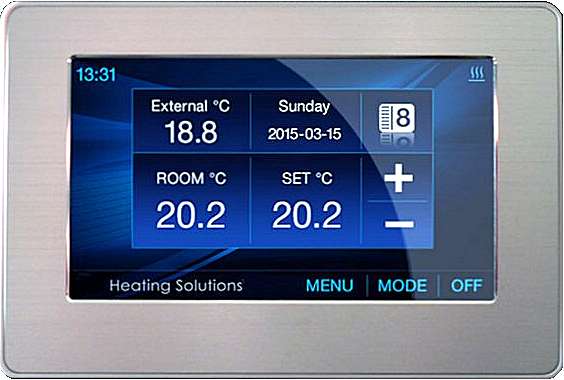 At 16 Amps, only smaller areas are possible. At 120 Watt/m² 30m² possible At 160 Watt/m² 22m²possible At 200 Watt/m² 18m² possible Larger areas possible with power protection! You get 2 devices in a single unit The E-DRON 16 offered here can perform everything in a single unit (floor thermostat can be set to 'room control with limitation' as factory setting),
Control: color digital display: TFT Mounting: Standard Flush (68mm socket) 2 years warranty color white (Dimensions 130 mm x 88 mm / W x H) User Manual |
NEW again a low-cost all-rounder: Daily/weekly timer (programs) With the advantage of being able to switch from floor to room temperature thermostat (floor temperature limited to programmed value) Wide range of settings available! NEU EB UTR 10B 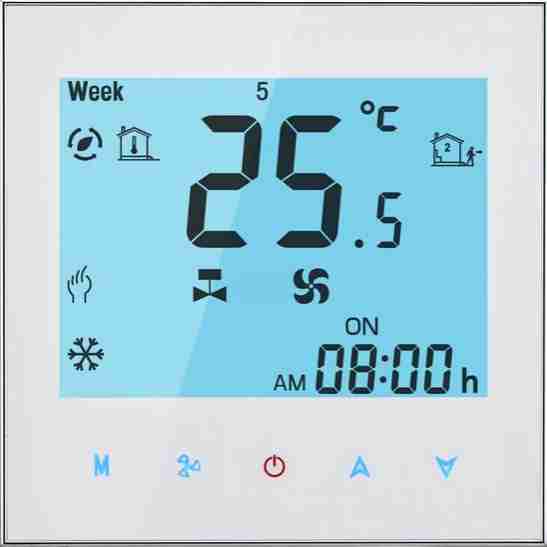 At 16 Amps, only smaller areas are possible. At 120 Watt/m² 30m² possible At 160 Watt/m² 22m²possible At 200 Watt/m² 18m² possible Larger areas possible with power protection! You get 2 devices in a single unit The UTR 91 w offered here can perform everything in a single unit (floor thermostat can be set to 'room control with limitation' as factory setting),
User Manual |
NEW again a low-cost all-rounder: Daily/weekly timer (programs) With the advantage of being able to switch from floor to room temperature thermostat (floor temperature limited to programmed value) Wide range of settings available! NEU EB UTR CDB 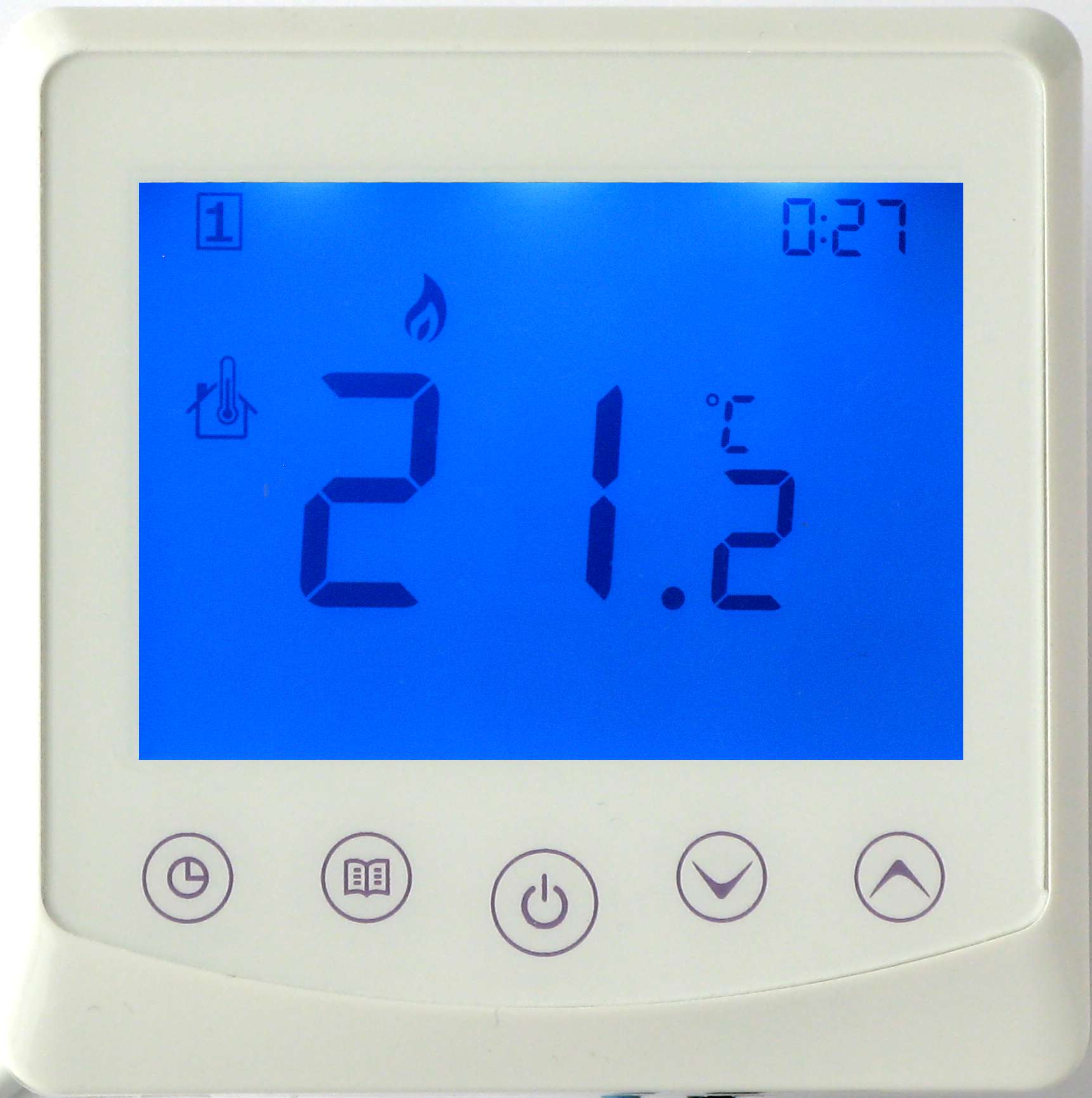 At 16 Amps, only smaller areas are possible. At 120 Watt/m² 30m² possible At 160 Watt/m² 22m²possible At 200 Watt/m² 18m² possible Larger areas possible with power protection! You get 2 devices in a single unit The UTR 91 w offered here can perform everything in a single unit (floor thermostat can be set to 'room control with limitation' as factory setting),
User Manual |
NEW again a low-cost all-rounder: Daily/weekly timer (programs) With the advantage of being able to switch from floor to room temperature thermostat (floor temperature limited to programmed value) Wide range of settings available! NEU EB UTR TXB 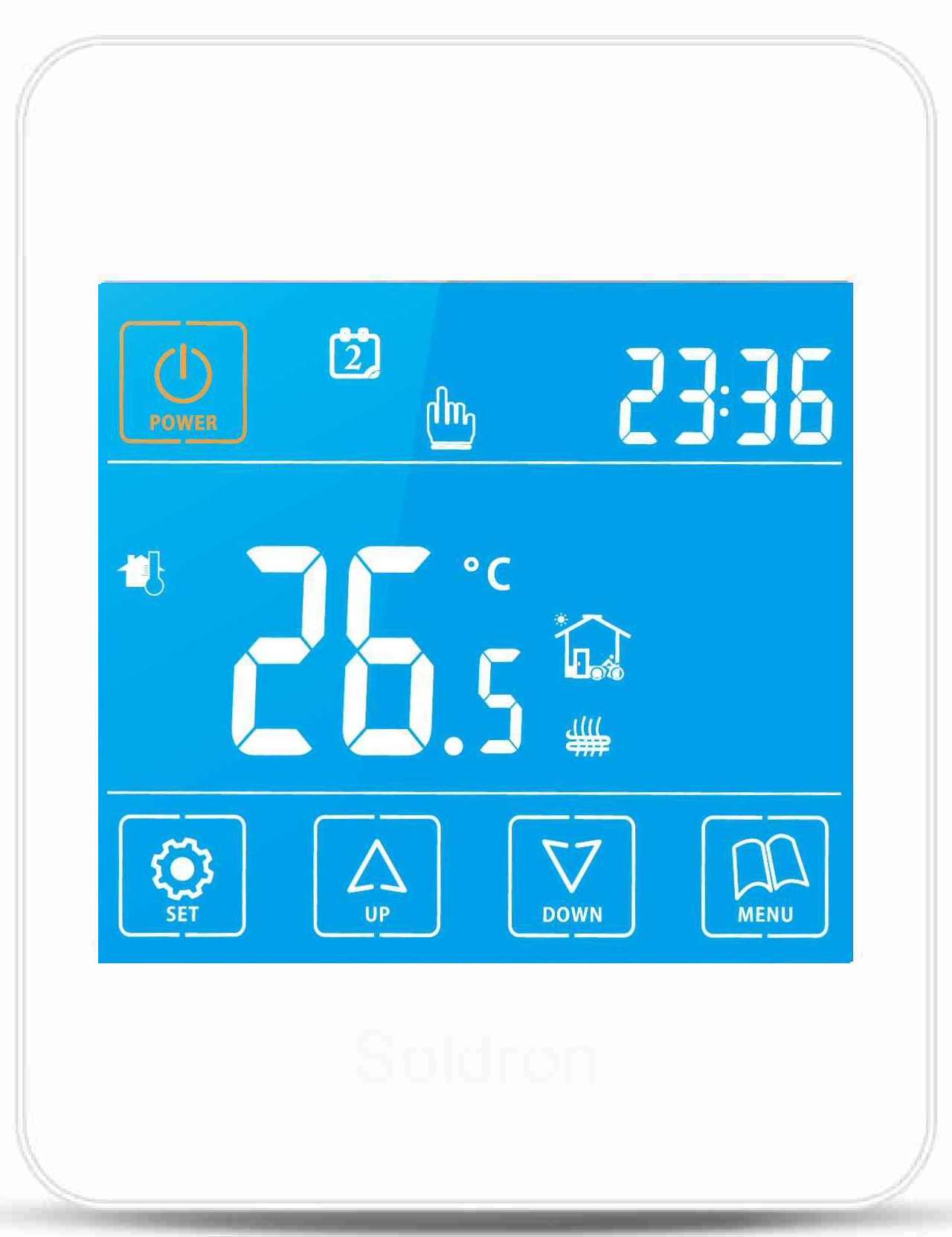 At 16 Amps, only smaller areas are possible. At 120 Watt/m² 30m² possible At 160 Watt/m² 22m²possible At 200 Watt/m² 18m² possible Larger areas possible with power protection! You get 2 devices in a single unit The UTR 91 w offered here can perform everything in a single unit (floor thermostat can be set to 'room control with limitation' as factory setting),
User Manual |
||
|
Thermostat: |
Performance: 200 Watt/m² |
Performance: 160 Watt/m² |
Performance: 120 Watt/m² |
Additional info |
|
Eberle EB 535 10A 2.4 KW |
12m² |
15m² |
20m² |
|
|
Eberle
EB 535 10A 2.4 KW With
16A relay 3.6KW |
12m²+18m² |
15m²+22m² |
20m²+30m² |
The thermostat also controls
heating mats
|
|
Eberle EB F2A 16A 2.4 KW |
18m² |
22m² |
30m² |
|
|
Eberle
EB 522 10A 2.4 KW With
16A relay 3.6KW |
12m²+18m² |
15m²+22m² |
20m²+30m² |
The thermostat also controls
heating mats
|
|
Eberle EB 512 10A 2.4 KW |
12m² |
15m² |
20m² |
|
|
Eberle
EB 512 10A 2.4 KW With
16A relay 3.6KW |
12m²+18m² |
15m²+22m² |
20m²+30m² |
The thermostat also controls
heating mats
|
|
Eberle EB 531 16A 3.6 KW |
18m² |
22m² |
30m³ |
|
|
Eberle
EB 531 16A 3.6 KW With
16A relay 3.6KW |
18m²+18m² |
22m²+22m² |
30m²+30m² |
The thermostat also controls
heating mats
|
|
Eberle EB Easy 3ft 16A 3.6 kW |
18m² |
22m² |
30m² |
|
|
Eberle
EB Easy 3ft 16A 3.6KW With
16A relay 3.6KW |
18m²+18m² |
22m²+22m² |
30m²+30m² |
The thermostat also controls
heating mats
|
Floor night storage heating
With electrical
floor
night
storage heating, depending on your local district and
the
electricity
provider, there are certain access
times
during which it is permitted to heat, e.g. 8+2
hours.
This can mean it is only be
possible to
heat in the evenings from 22.00 until 6.00 in the morning
and
then again from 14.00 to 16.00.
In the times in between when it is
not
allowed to heat, the stored heat energy in the floor
plate must
be sufficient
to cover the heating needs. The
floor plate must be thick enough for this: depending
on the
heating requirement for the room, from a min.
of 8cm up to 12 or 15cm . Such a solid floor plate
of up to 15
cm is expensive not only in terms of the floor
itself, but also
with regard to the height which is lost for the room itself as
a
result.
When renovating a house you
should check
whether the structural design
of the
building
can withstand the added load from such a
heavy
floor plate.
Also, a powerful heating mat of e.g. 200 Watt/m² needs to be fitted for
floor night
storage heating. The
reason for
this is that the warm-up period with a less
powerful heating mat must start earlier in the night
in order to
charge
the floor plate with enough heat. The warm floor then of course starts to heat the room
- in the
middle
of the night.
Therefore the aim should be to start the warm-up period as
late as
possible using a powerful heating mat to shorten
this time
(shortly before the end of the night storage period at 6.00).
This still, however, makes little
sense if
the house is heated at 6.00 in the morning, but all
the
occupants leave to go to work leaving nobody to feel the
benefit of the
heat.
But if you do not heat right up
until 6.00,
by the late afternoon, when the residents return from work, there will no longer be sufficient heat
stored
in the floor plate. The 2 hours of
additional heating time from 14.00 to 16.00 are often not
enough to
reheat the cooled house and to store enough heat until 22.00
when it is
permitted to start heating again.
With night storage heating there is a further rule of thumb: the larger the heated area,
the lower
the required storage temperature in the floor plate,
allowing
the self-regulation
effect of the
floor heating to come into play.
Floor heating with
restricted
time:
Much more effective than night storage floor
heating is the method in which the permitted heating period is subject
to restrictions. e.g. 2
hours in the middle of the day and one hour in the evening
during which
it is not allowed to heat.
Otherwise you can heat as
required;
it is therefore not
necessary to
"hoard" heat unnecessarily when it benefits no-one.
In this case
it is not necessary to
have a
very thick floor plate for heat storage. The response time of the floor
heating
improves noticeably.
Night
storage
floor heating
is better suited to situations in which the rooms are used
constantly.
Ask your electricity provider which heating tariffs apply for
you.
Even if a heating power
tariff
with restricted times is a little more expensive than
a pure
night storage electricity tariff, it may ultimately prove cheaper as the
entire house does not always need to be heated.
Underfloor heating, or simply for
taking
the chill off the bathroom floor
To take the chill off the bathroom
floor
a high-power 200
Watt/m² heating mat ( TFS ) can be used in conjunction with a timer
switch to
shorten the warming phase.
If it is to warm the floor in good time a heating
mat with a lower power rating must
be switched on much earlier,
thereby
releasing
heat into the room.
As an anti-chill measure this is
unnecessary
because the actual
heating for
the
room comes from another heating source.
A heating mat with a
higher power
rating can be switched on later and then only warms
the floor when it is
actually needed.
For short
periods of use in the bathroom the more powerful heating mat
is
actually more economical than one with a lower rating.
If the floor heating is to be
the
main source
of heating in the bathroom a more
powerful heating mat is advisable, especially as the available floor space in
which the
heating
mats can be laid is relatively small given that the bathtub
and/or
shower
cabinet take up a considerable amount of space.
If high levels of heating are
required in
the bathroom, the floor temperature may have to be very high
to
provide sufficient warmth (well over 30°C). The powerful 200 Watt/m² heating
mat, or
possibly the 160 Watt/m² can provide this.
However, in this case an additional heating source, e.g. a
heated towel
rail, may be preferable.
Care should be taken if, instead of concrete, a dry floor
and e.g. double-bolted,
gypsum-bound sheeting boards
are used.
In this case only
heating mats
with a 120 Watt/m² rating should be used.
If the floor heating is the primary heating source and there are double-bolted
gypsum-bound
sheeting boards, only use heating mats of maximum 160
Watt/m²,
and not 200 Watt/m².
Explanation: gypsum-bound sheeting boards lose their
internal
cohesion at temperatures significantly above 40°C.
The 120 Watt/m² heating
mats,
even with continuous heating and no thermostat control would only be a maximum of
12°C warmer
than the bathroom air and therefore well below the critical
temperature.
Water-contact areas:
If heating mats are to be laid
beneath the
tiles in a wet area, i.e. where
the
water from the shower hits the tiles, protection class I heating
mats should
be laid, such as EPB-type or FH,
FHT types.
Download information (prices,
assembly etc.) as Word 6.0
or Word 97 file:
Back
to homepage http://www.soldron.de/
|
Applications: |
Advantages: |
Back to
homepage http://www.soldron.de/
[Conditions of sale and delivery] [PriceList] [Picture-PriceList as word.doc] [Look at Set-Offer] [Detailed product information Laying tips]
 Question@soldron.de
please phone the
following
number if you have any questions:
The
background
music is Über d'Alma
(Über d'Alma was one of the favourite
songs of
Ludwig Thoma.)
as a midi sequence.
By
kind
permission of the performer René Senn
Electrical
underfloor heating
Electrical
undertile heating
Electrical
thin-bed underfloor undertile heating
Electric
under floor heating
Electric
under tile heating
Electric
thin-bed under floor heating under tile heating